

In 2026, investors are no longer asking, “What is wellness?” They’re asking, “What isn’t wellness?”
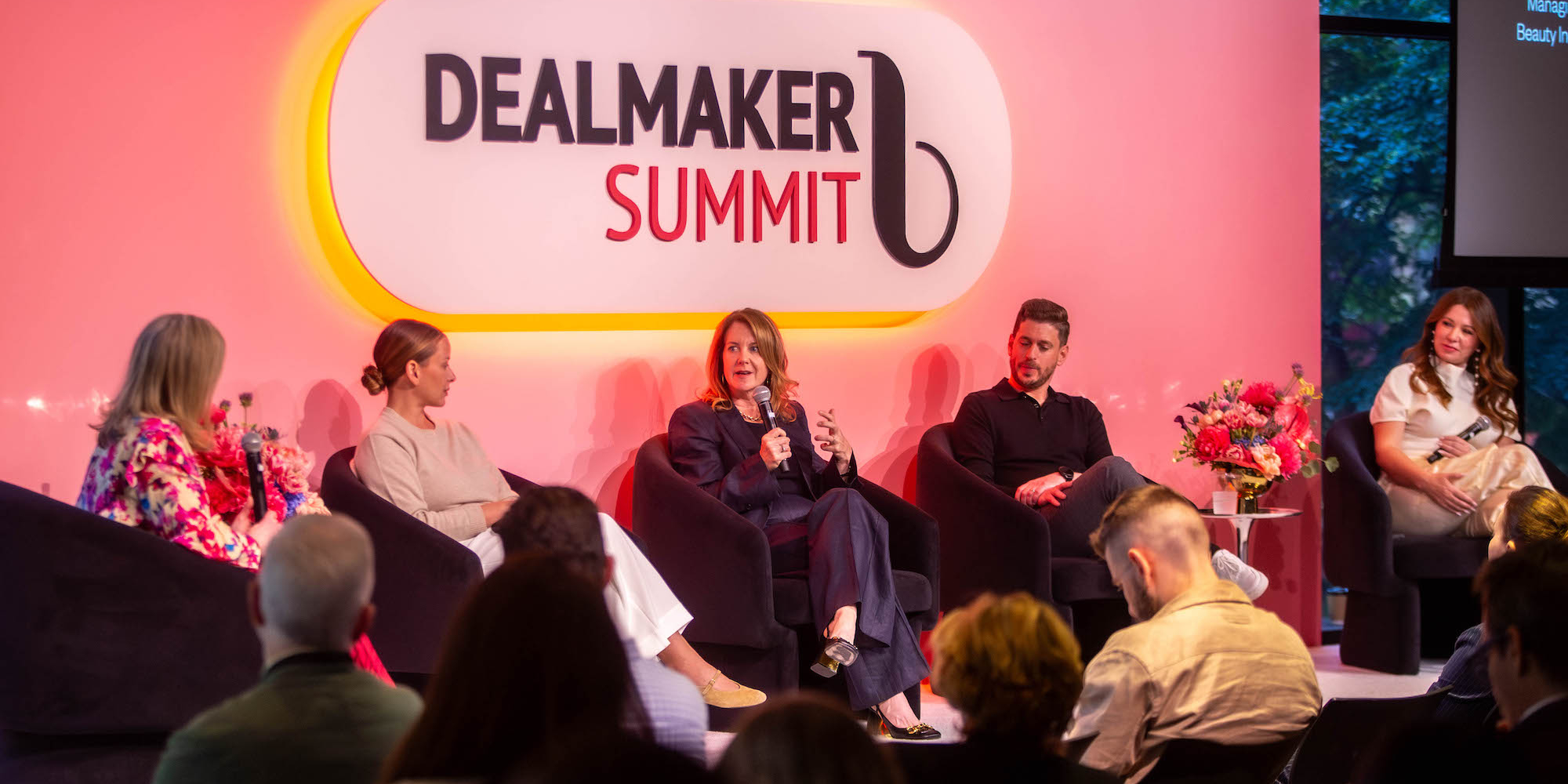
With estimates valuing the global wellness market at between $2 trillion and $6 trillion, panelists at Beauty Independent’s Dealmaker Summit last week in New York City argued the category is rapidly expanding into new corners of consumer goods. The discussion, featuring Kelly McPhilliamy, managing director and head of health and beauty at Citi’s consumer and retail investment banking division, Evan Mintz, principal at growth equity firm Humble Growth, Naomi Whittel, founder and CEO of hair growth peptide brand OMI Wellbeauty, and Lauren Bosworth Natale, founder of women’s intimate health brand Love Wellness, centered on four key themes defining the sector today: the wellness-ification of everything, the importance of scientific validation, the opportunities and risks presented by TikTok Shop, and the role of product innovation in driving consumer adoption.
The Wellness-ification Of Everything
The expansion of wellness beyond its traditional boundaries is picking up speed as consumers seek health-focused solutions across categories ranging from sun protection, where McPhilliamy highlighted brands like Supergoop and Colorescience, to deodorant innovators like Carpe addressing concerns such as hyperhidrosis.
“When is enough enough? I mean, I think the consumers are probably going to decide that, and at this point they haven’t decided there’s enough,” she said. “They want more.”
McPhilliamy also pointed to the growing convergence of aesthetics and wellness as further evidence that consumers are pushing brands into new territory. “We continue to see an evolution, but it’s all consumer led,” she said. “Consumers are looking for these things and so far it doesn’t feel like enough enough.”
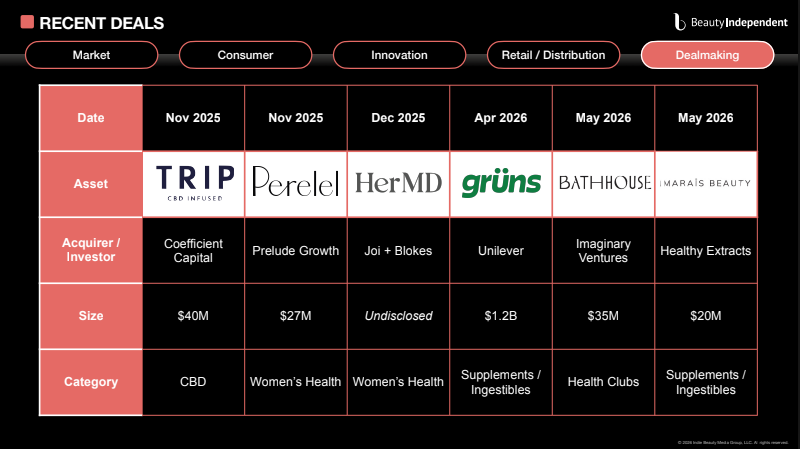
The trend extends to everyday products as well. Listing deals involving Dude Wipes, Gojo and Touchland, McPhilliamy observed companies including Clorox and Reckitt are embracing health and hygiene as core growth areas. “There’s a consumer movement that is driving M&A in the category,” she said. “It’s the everyday products.”
The Scientific Edge
As wellness brands flood the market with ambitious claims, panelists agreed scientific validation is essential, although they differed on who should bear the cost of producing it.
“When it comes to the importance of peer-reviewed, double blind, placebo-controlled clinical studies, it’s under-hyped,” said Whittel. “What I think is overhyped is the supplements that are out there in the market [with] no clinical research on formulations.”
Natale countered that conducting rigorous clinical studies can be prohibitively expensive for emerging brands. “The barrier to entry when it comes to those types of studies are incredibly high from a budgetary perspective, and it’s really hard to ask a small consumer brand to make that kind of investment out of the gate,” she said. “So, maybe it falls onto strategics to start doing that kind of research.”
Mintz shared the view that scientific validation is paramount in the crowded wellness market, highlighting that Humble Growth evaluates brands with an eye toward eventual strategic acquisitions and prioritizes companies with strong scientific foundations. “We focus on trends, not fast fads,” he said, pointing to protein and fiber supplementation tied to GLP-1 adoption as categories attracting the firm’s attention. He underscored investors look to repeat purchases, customer retention and retail velocity as indicators of a product’s efficacy when formal clinical research isn’t available.
The TikTok Shop Balancing Act
Wellness is one of TikTok Shop’s top categories, and OMI is preparing to launch on the platform in the next three to four months, but panelists cautioned that it can be a double-edged sword for brands. Love Wellness has sold products on TikTok Shop for two years and generates millions of dollars annually through the channel, according to Natale. Still, she warned brands to be mindful of the risks.
“What if TikTok went away tomorrow and then I have to wipe it out of my P&L and I can’t make my year?” she said. “So, there is a risk-reward with these types of platforms.”
Mintz described TikTok Shop as “a great trial channel,” but noted that repeat purchase behavior tends to be weaker than on direct-to-consumer websites or Amazon. He stressed that brands should consider whether their core customer actually shops on the platform and be careful about the claims they make in their marketing. Referring to claims, he said, “That’s going to get a lot of scrutiny on exit.”
Natale stressed brands can’t simply set it and forget it with TikTok Shop, saying they have to stay heavily invested and closely manage the relationship to take advantage of the platform’s incentives and support.
Looking ahead, Whittel predicted TikTok’s role in commerce will evolve, citing examples of South Korean brands using AI-powered livestream hosts to sell products around the clock.
The Innovation Engine
As new wellness formats proliferate, the panelists maintained they must solve a genuine consumer need rather than be introduced for novelty’s sake.
Natale explained that Love Wellness launched dissolvable strips called Cravings because they serve a specific use case consumers can easily take on the go rather than simply offering a different delivery format. She said, “It’s really easy to chase trends and to try to do everything and I would just encourage focus and clarity.”
McPhilliamy echoed that sentiment from an investor perspective, saying strategics are looking for “differentiation and efficacy” and that format innovation should drive better product performance, loyalty and repeat purchases rather than exist merely to produce newness.
Discussing the brand Momentum’s creatine chew, Mintz concurred that new formats can increase purchase frequency and retention, but emphasized that “as long as the new format drives efficacy, that’s most important.”
Click here to secure Early Bird tickets to Dealmaker Summit running from Nov. 9 to 10 in London.