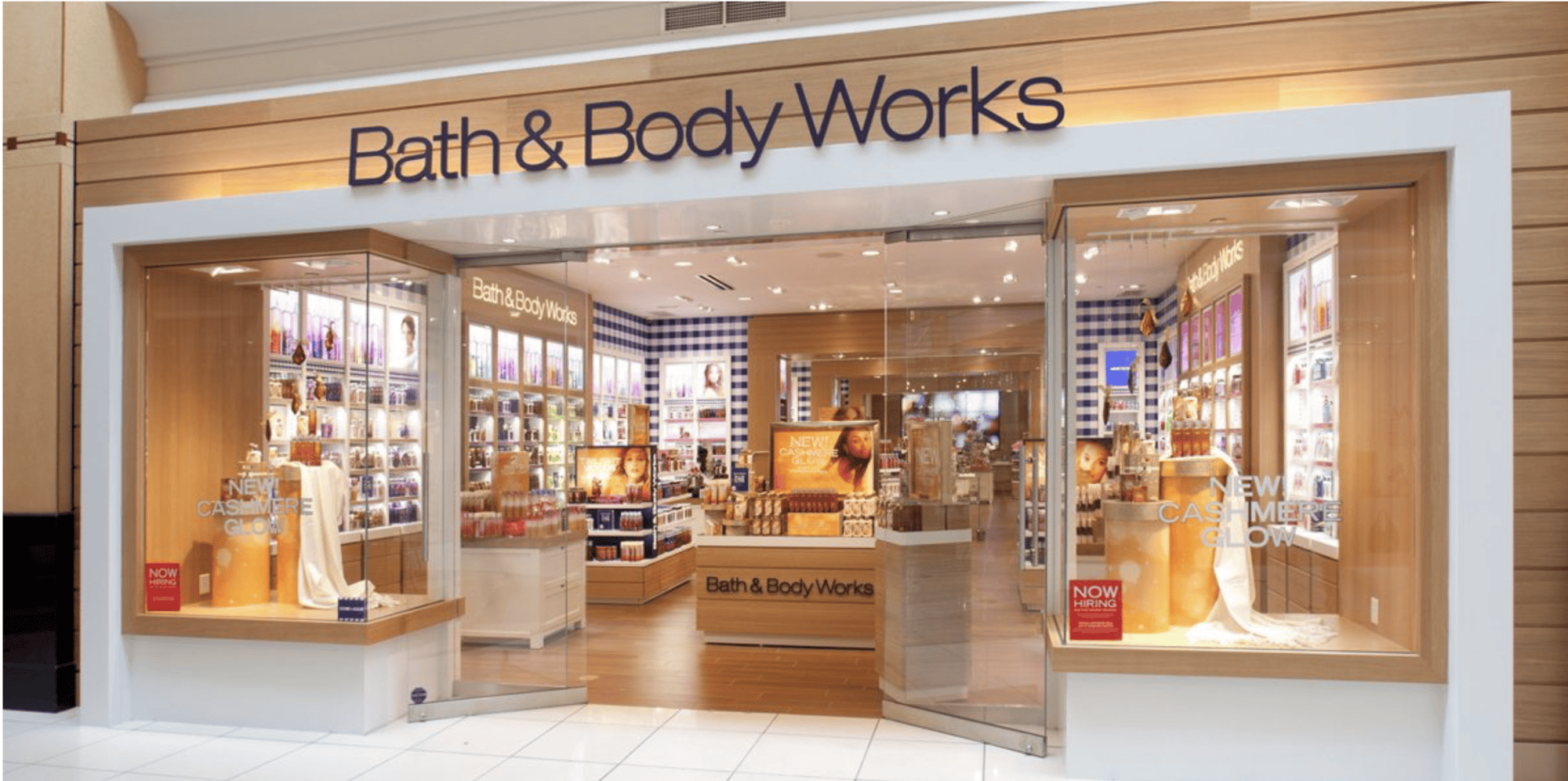

Does Bath & Body Works, the $4 billion-plus mall staple built on scented hand soaps, shower gels and three-wick candles, need reinforcement to stay relevant?
As it confronts declining sales, waning mall traffic and a fiercely competitive beauty landscape, the company appears to believe broader distribution could help. It’s teaming up with Ulta Beauty to bring 23 Bath & Body Works products to more than 600 of Ulta’s stores and its website on July 12.
The partnership arrives at a pivotal moment for Bath & Body Works. After riding a pandemic wave that increased sales 46% from about $5.4 billion in 2020 to almost $7.9 billion in 2021, the company hasn’t returned to that level, with sales down 0.2% last year to slightly under $7.3 billion. In the first quarter this year, sales dipped roughly 3% to $1.38 billion. Full-year sales are expected to decrease between 2.5% and 4.5% as it continues its turnaround efforts.
Called its “Consumer First Formula,” Bath & Body Works’ turnaround plan involves streamlining assortments, investing in digital capabilities, strengthening loyalty, expanding distribution beyond branded stores and refocusing on its core strengths in fragrance and body care. The company has pulled back from less successful haircare and men’s grooming products, launched on Amazon this year and began selling in more than 600 college bookstores nationwide last year.
Bath & Body Works is shrinking its mall footprint as well. Today, nearly 60% of its American fleet is located in off-mall shopping centers and standalone locations. It’s targeting 75% of the fleet to be off-mall over the next few years. Bath & Body Works operates roughly 1,900 stores across North America.
Maly Bernstein, the former Bluemercury CEO who became COO of Bath & Body Works last year, wrote in a LinkedIn post that the Ulta partnership “reflects how we’re bringing our Consumer First Formula to life, meeting consumers where they’re already shopping for specialty beauty and fragrance and creating new ways to discover Bath & Body Works. It’s also an important example of how we’re working to win in the marketplace, expanding our reach through a complementary brand with a curated assortment designed specifically for the Ulta Beauty consumer.”
We were curious what beauty experts thought about Bath & Body Works’ attempts to reignite growth. In our ongoing series posing questions relevant to indie beauty, we asked ten retail executives, investors, consultants and analysts the following question: Do you think Bath & Body Works’ partnership with Ulta could help boost its turnaround?
-
 Oliver Garfield Former CEO, Cos Bar
 The short answer is that the Ulta partnership will help at the margin, but not a turnaround driver the headline suggests. Start with what Bath & Body Works does well. For decades it has been a mall-based specialty retailer that controls the entire four-wall experience: the scent in the air, the lighting, the wall of seasonal product, the associate who hands you a basket the moment you walk in. That environment is the brand.
Inside Ulta, the company trades that control for a curated endcap or a gondola set, and the real risk is that an assortment built on sensory immersion and impulse gets reduced to a shelf that shoppers walk past. Brand equity cuts the other way, too (i.e., the logo is iconic and people will recognize it instantly), but recognition on a shelf is not the same as the experience that earned the loyalty in the first place.
From a pure sales standpoint, this is a smart, low-risk move. Six hundred-plus of Ulta's highest-performing doors, Ulta.com and a loyalty base north of 40 million members put the brand in front of a large pool of beauty shoppers it doesn't reach today, and the incremental wholesale revenue layers on top of the existing store and direct-to-consumer channels rather than cannibalizing them.
There's even a brand-health upside worth watching. Bath & Body Works has trained its customer on near-constant promotion, and Ulta's cleaner, loyalty-driven environment could introduce the brand to a shopper who buys it at full price.
Where I'd push back is on calling this a turnaround engine. The "Consumer First Formula" is fundamentally about reigniting newness, product innovation, and pricing discipline, and those problems get solved on the product side in their stores and DTC, not by adding a distribution channel. Wholesale can contribute real incremental revenue on top of their stores and DTC, but on a company this size, a curated, lower-control assortment in 600 doors is a sales tactic, not a fix for what's actually weighing on the business. I think it's the right move. I just wouldn't mistake it for the tipping point of a turnaround.
- Neil Saunders Managing Director of Retail, GlobalData
Bath & Body Works is neither a bad retailer nor a bad brand. Its main problem is that it is a category leader across many of the things it sells, like shower gels and candles. A high market share poses two problems. It makes incremental growth harder to achieve, and it means the business is a target for competitors.
That competitor set has widened over recent years and now includes a myriad of smaller sellers on platforms like Amazon and TikTok Shop. Their individual nibbles at Bath & Body Works’ share may be small, but collectively they have a big impact. Faced with these issues, Bath & Body Works needs to find ways of getting itself in front of more customers and boosting volume.
Wholesale is the obvious route to do this, and it started with selling on Amazon. Ulta is the latest expansion of this strategy, and it has the potential to grow brand reach. However, the ranges put into Ulta need to be tailored to that consumer base, and that means emphasizing things like clean beauty, formulations, scientific solutions to beauty issues and so forth. Bath & Body Works has some of this, and is moving to deepen these attributes across its products, but a channel-specific approach its critical for success.
- Rose Hamilton Founder and CEO, Compass Rose Ventures
The Ulta partnership can help Bath & Body Works’ turnaround, but not because it adds 600 more doors. Bath & Body Works does not have an awareness problem. The harder issue is what box the consumer has put it in.
For many shoppers, the brand still means mall trip, promotion, gifting, seasonal fragrance or a three-wick candle run. Those are powerful associations, but they can also become limiting if Bath & Body Works is trying to feel more modern, more beauty-relevant and less dependent on promotional behavior.
That is why Ulta is interesting. Ulta gives Bath & Body Works a different kind of permission. It puts the brand next to beauty routines, fragrance exploration, body care replenishment and a shopper who may not have planned to visit a Bath & Body Works store that day.
That can create reconsideration, which is more valuable than reach. But the assortment has to be disciplined. If Bath & Body Works brings too much of the same promotional muscle into Ulta, the partnership risks becoming more distribution without much repositioning.
The things I would watch: whether Ulta brings in a more incremental shopper, whether it supports healthier price behavior, and whether it makes Bath & Body Works feel more credible in beauty without losing the emotional accessibility that made the brand matter in the first place.
So, yes, this can help. But the test is not whether 600 doors produce a sales lift. The test is whether those doors give consumers a better reason to see Bath & Body Works differently.
- Rich Gersten Co-Founder and Managing Partner, True Beauty Ventures
The Ulta and Bath & Body Works partnership is a compelling strategic opportunity, but its success will ultimately depend on the brand's ability to convert increased exposure into consumer demand.
Bath & Body Works already has one of the largest retail footprints in beauty and enjoys strong brand awareness. The challenge today is not distribution, it is maintaining relevance in a category defined by constant innovation, new brand launches, and rapidly evolving consumer preferences. Ulta provides access to a highly engaged beauty shopper and gives Bath & Body Works the opportunity to introduce the brand to consumers who may not otherwise visit one of its stores.
The timing is also favorable. Fragrance continues to be one of the strongest categories in beauty, and Bath & Body Works has an opportunity to capitalize on that momentum by showcasing its assortment in a destination where consumers are actively shopping and discovering fragrance.
Ultimately, this partnership is less about adding another point of distribution and more about customer acquisition. If Bath & Body Works can use Ulta to create renewed excitement around the brand and give a new generation of consumers a compelling reason to choose its products over an increasingly crowded competitive set, I believe the partnership could become an important contributor to the company's broader turnaround.
- Lane Barrocas Beauty Retail Consultant
Bath & Body Works entering Ulta has the potential to be meaningful, but not for the reasons most people will point to. The real value isn’t incremental reach; it’s the opportunity for Bath & Body Works to structurally reset its P&L.
The brand’s biggest challenge today isn’t demand, it’s traffic. With roughly 1,780 U.S. stores and about 40% still mall‑based, Bath & Body Works is over‑distributed in a channel that no longer delivers the volume it once did.
Jefferies notes that 63% of Bath & Body Works’ stores already sit within one mile of an Ulta, which they frame as cannibalization risk. I see that overlap as a strategic unlock. Ulta represents the highest productivity beauty traffic in the country, especially in fragrance where they’re comping high‑teens. In many ways, Ulta isn’t just new distribution; it’s a traffic correction.
The second dynamic is the channel mix shift that’s already underway. Bath & Body Works’ average unit value sits in the $8 to $16 range, and at that price point, DTC economics are structurally challenged. High pick/pack costs, shipping subsidies, marketplace fees and low basket sizes all compress contribution margin. This is why “digital acceleration” sounds compelling but is difficult to scale profitably for mass‑priced brands.
Ulta absorbs the operational burden. They build the basket, set the free‑shipping threshold, blend Bath & Body Works’ low AUR with prestige AUR and take inventory risk upfront. But the bigger story is that Bath & Body Works is clearly rebalancing its channel mix away from dependence on owned DTC.
Ulta, Amazon and selective wholesale partners become the profitable volume engines that DTC simply can’t be at Bath & Body Works’ price point. This is the same playbook we’ve seen from E.l.f., Sol de Janeiro, Native, and Dr. Teal’s: brands that keep DTC for loyalty and storytelling, but don’t depend on it to drive the P&L. Bath & Body Works won’t exit DTC, but they will stop relying on it as a growth engine. Ulta becomes the profitable volume channel that DTC can’t be.
Where this partnership becomes truly meaningful is in enabling Bath & Body Works to rationalize its oversized fleet. It cannot fix its P&L without addressing its store base, and hundreds of mall stores are break‑even or loss‑making. Jefferies confirms Bath & Body Works is targeting 75% off‑mall versus around 60% today, but that transition is expensive and slow if it has to do it alone.
Ulta changes the equation. With 63% overlap, Bath & Body Works can close underperforming mall stores, close stores in proximity to Ulta where Ulta already wins the bath & body trip and reduce strip‑center locations that no longer justify the operational burden. Ulta becomes the bridge that lets Bath & Body Works shrink its fleet without shrinking its brand, and that is the most important structural lever in the turnaround.
Ulta also becomes Bath & Body Works’ inventory‑management engine, which is a hidden but powerful P&L unlock. Bath & Body Works’ operational pain points today include aged seasonal inventory, excess units, slow sellers and a heavy reliance on promotions to clear stock. Ulta solves all of these. With 21 Days of Beauty, loyalty events, gifting programs, and digital add‑on mechanics, Ulta becomes a high‑velocity, brand‑safe way to move inventory. Ulta gives it something it has never had before: a national clearing mechanism that doesn’t erode brand equity.
So, will this partnership help Bath & Body Works’ turnaround? Yes, but only if it treats it as a structural reset rather than incremental reach. Bath & Body Works doesn’t need new customers to fix its P&L. It needs lower occupancy, lower labor, lower capex, higher wholesale mix, higher inventory turns and fewer mall stores. Ulta enables all of that. Ulta isn’t the turnaround, but it’s the enabler of the turnaround.
- Lara Schmoisman Founder and CEO, The Darl
From a brand builder and growth perspective, this partnership is a masterclass in aggressive distribution expansion, but it behaves more like a high-impact adrenaline shot than a permanent cure for structural retail challenges. On paper, inserting Bath & Body Works into 600 Ulta doors is a brilliant market penetration move that immediately solves their most pressing brick-and-mortar dilemma: declining foot traffic in traditional malls.
By embedding themselves into Ulta’s retail ecosystem, they are hijacking high-intent foot traffic and placing their products directly into the "beauty basket" of consumers who are already in an active purchasing mindset. It creates a seamless, low-friction upsell where a consumer shopping for prestige haircare or premium cosmetics can easily toss a high-margin candle or body cream into their cart on a whim.
Looking at this through a brand equity lens, the true goldmine here isn't just the physical shelf space; it’s the immediate access to the Ultimate Rewards loyalty data. This partnership allows Bath & Body Works to capture a highly active, modern beauty demographic that may have outgrown the nostalgic mall experience but is ripe for digital and physical re-engagement. Furthermore, years of heavy reliance on aggressive, high-volume promotional cycles like their signature "Buy 3, Get 3" sales have slightly diluted the brand's perceived value over time.
Placing their newly curated assortment alongside premium, trending brands on Ulta's sales floor inherently elevates consumer perception, giving them a prestigious backdrop to showcase their new product innovations.
However, as a growth strategist, the critical question I always ask is whether this move will drive true incremental growth or merely result in customer cannibalization. The real test of this turnaround plan will be whether this partnership introduces the brand to entirely new consumer segments, or if it simply shifts existing, loyal shoppers away from standalone Bath & Body Works locations over to Ulta doors.
If a consumer decides to buy their favorite fragrance mist at Ulta instead of walking down the mall to the standalone storefront, Bath & Body Works is essentially surrendering a chunk of their retail margin to Ulta’s revenue cut without actually expanding their overall market share. Ultimately, this move will absolutely provide the immediate top-line revenue spike needed to jumpstart their turnaround and buy them time with investors.
New distribution channels, however, can only mask execution challenges for so long. For this partnership to transform into sustainable, long-term growth, the brand must deliver on the actual innovation side of their "Consumer First Formula" because a change of address on the retail shelf cannot compensate for a lack of genuine product newness once the initial novelty wears off.
- Tina Bou-Saba Founder, CXT Investments
I will confess to being a bit puzzled by this partnership. Not because it’s a bad idea, but simply because it seems unlikely to significantly move the needle for Bath & Body Works. Bath & Body Works has strong brand awareness as far as I understand and about 1,800 U.S. stores. As such, the company is not lacking for retail square footage. So, it must be that Bath & Body Works believes that partnering with Ulta will expose the brand to new customers as well as give it credibility among those who may already have awareness, but not necessarily shop at Bath & Body Works.
However, this does not seem to align with the priorities of the “Consumer First Formula.” Moreover, given Ulta’s large assortment in its stores, it seems unlikely that this will be a sizable business opportunity for Bath & Body Works. So the company must be hoping that Ulta shoppers will learn about, try and perhaps buy its products at Ulta and then return for future purchases directly at Bath & Body Works. In that scenario, Bath & Body Works at Ulta would be more like lead gen for its own stores and website.
It’s not a terrible idea, but it’s hard for me to see it as a significant business driver. I’d prefer to see Bath & Body Works focus on product innovation, merchandising and customer experience in its own stores. The company’s weak performance during a strong fragrance cycle suggests major execution problems and/or leadership errors in the past few years. I don’t see how selling at Ulta fixes this.
- Stephen Letourneau COO and CBO, BFYW
Here in Columbus, OH, Bath & Body Works holds a special place in all of our hearts, and we are all rooting for this brand evolution. Those not born with a “19” in front of their birth year will never understand the cultural revolution that Bath & Body Works ushered in. Scent layering your Juniper Breeze and Country Apple, the power of Scrubby Buddies for bath time and, of course, the chic evolution when they partnered with Ian Ginsberg of C.O. Bigelow to bring NYC to Columbus.
As new stores were popping up, the coolest gift came wrapped in that signature gingham ribbon. Quickly evolving into candles and eventually into the White Barn Candle Co, and expanding to open Columbus' own C.O. Bigelow at Easton Town Center, the company was poised to be another generation's go-to brand.
But then we saw its stock drop socially and then dollar-wise. It went from quaint to chic to strip mall fodder in what felt like moments. It wasn't a major scandal like Abercrombie or a product meltdown. It was like there was a commitment to stop being playful and even more inventive.
After the beauty collection launched (and thankfully left), there was a promising partnership to transition stores into chic day spa service centers that never materialized. No longer the shiny beacon of chic, partnerships faded and the core collection stagnated. Consumers no longer wanted to "layer" their scent or smell like Sweet Pea or Cucumber Melon. As the scent story evolved, the marketing didn't. Eventually, there wasn't enough glitter body lotion to save the brand.
With Ulta, this is a savvy move for a brand looking to reinvent itself. Ulta has the consumer data, the Bath & Body Works team has the knowledge, and a team of innovators is waiting for the chance to evolve. For the partnership to work, Ulta needs to share its consumer knowledge to educate the Bath & Body Works team on what the next generation is searching for.
Bath & Body Works needs to give its innovation team runway to evolve while maintaining the quality baked into the brand's DNA. It needs to be allowed to grow up, and Ulta needs to let them shine with a product block that their consumers will purchase. It can't be air fresheners and glitter soaps.
If they can curate a collection of playful scents alongside some of the sophisticated aromatherapy pieces C.O. Bigelow added to their catalog, well, watch out. Given all of the other 90s nostalgia happening right now, Bath & Body Works and Ulta are poised to make a major impact on the market.
- Kelly St. John Founder and CEO, KSJ Collective
I think the partnership can help, but only if Bath & Body Works treats Ulta as more than another wholesale door.
The biggest opportunity is repositioning. Bath & Body Works is a very powerful brand, but it has also trained many consumers to shop around promotions, seasonal launches and stock-up moments. Ulta gives the company a chance to show up in a beauty-first environment where the shopper is already thinking about discovery, routine-building and trading up. That matters as body care continues to premiumize and as consumers increasingly think about body routines with the same level of intention they bring to facial skin care.
At KSJ Collective, we are seeing strong performance from body brands on Ulta Marketplace, and we are also seeing Ulta evaluate body brands for future store opportunities in 2027 and beyond. That tells me the retailer is leaning into prestige body care in a very intentional way.
Bath & Body Works has permission to play there because it already owns fragrance-led body care in the consumer’s mind, but it will need to be thoughtful about the assortment. The Ulta shopper will respond best to products that feel curated, sensorial and beauty-relevant, not simply a replication of the mall store experience.
So, yes, I think it can support the turnaround by expanding reach, modernizing the brand’s beauty credibility and creating a new discovery channel, but it will only be truly additive if Bath & Body Works uses the partnership to elevate the consumer experience and reduce reliance on discount-driven traffic.
- Alexzndra Sylvia Partner, Beauty and Wellness, Mercenary Beauty
Yes, I think this partnership can help accelerate Bath & Body Works' turnaround. It can't hurt.
The wholesale revenue alone won't materially change Bath & Body Works' trajectory. The real opportunity is customer acquisition. Ulta gives the brand access to a younger, beauty-focused consumer while elevating perception and expanding its reach beyond the mall into a discovery-driven beauty environment.
Three reasons I think this is a smart move:
1. They're joining the winners.
Bath & Body Works is trailing the market, while Ulta continues to post positive comparable sales. If you're trying to reignite growth, partnering with a winning retailer is a smart move. It also advances Bath & Body Works' strategy of reducing its reliance on mall traffic without adding more stores.
2. The curated assortment is the real opportunity.
The phrase that stood out to me was "a curated assortment designed specifically for the Ulta Beauty consumer." That's the key to making this partnership work. Ulta wins by striking the right balance between nostalgia and what's trending.
For many Millennials, Bath & Body Works was our introduction to fragrance. We collected matching mists, creams, and shower gels in scents like Sweet Pea and Cucumber Melon. Today's gen Z shopper has a similar obsession with building fragrance wardrobes, layering scents and collecting the latest gourmand fragrances. A thoughtfully curated assortment can tap into that same collecting behavior by pairing iconic favorites with today's hero products, making Bath & Body Works feel both nostalgic and completely relevant again.
3. It's about relevance, not awareness.
Bath & Body Works doesn't have an awareness problem, it has a relevance problem. Ulta helps reposition the brand within today's beauty landscape and reintroduce it to consumers who haven't stepped into a Bath & Body Works—or walked out smelling like 13 different scents—since the early 2000s.
Like any retail partnership, success will come down to execution. If this is treated as just another wholesale account, the impact will be limited. But if Bath & Body Works uses Ulta as a customer acquisition and brand-building platform, it could become one of the smartest moves in its turnaround strategy.
If you have a question you'd like Beauty Independent to ask retail executives, investors, consultants and analysts, send it to [email protected].



Leave a Reply
You must be logged in to post a comment.