


Oddity Tech is aptly named. It’s always stood apart in the beauty industry, neither fully a technology company nor purely a product brand, but a performance marketing engine with a maximalist approach to makeup.
The parent company of Il Makiage, SpoiledChild and MethodIQ has also been an outlier in the public markets. At a time of limited beauty IPO activity, it went public in 2023 at a $2.7 billion valuation, raising roughly $424 million in an oversubscribed offering and seeing its shares jump about 35% on debut to around $48. The following year, its stock hovered in the high $30s to mid-$40s before climbing into the $60 to $70 range in 2025, when it generated a record $810 million in sales on gross margin of 72.5%.
Then, on Feb. 25, the value of its stock collapsed roughly 50% to the mid-teens after Oddity warned that first-quarter revenue would shrink approximately 30%, a sharp reversal from consensus expectations for continued growth of about 10% to 15% and its quarterly increases last year in the range of 24% to 27%.
The sudden shift wasn’t due to weakening demand, but to a disruption in the customer acquisition mechanism that powered Oddity’s growth, prompting broader questions across the beauty and direct-to-consumer landscape about other companies’ exposure and how they might respond.
Together with Ayal Pascal, head of beauty at consultancy and accelerator Bold Brands Co., creator of beauty marketing tactics publication Beauty MarketingIQ and former VP of marketing and product development at Allies of Skin, we dissect the disruption that caused Oddity’s troubles, lessons for brands and whether Oddity can bounce back.
The Model Behind Oddity’s Growth
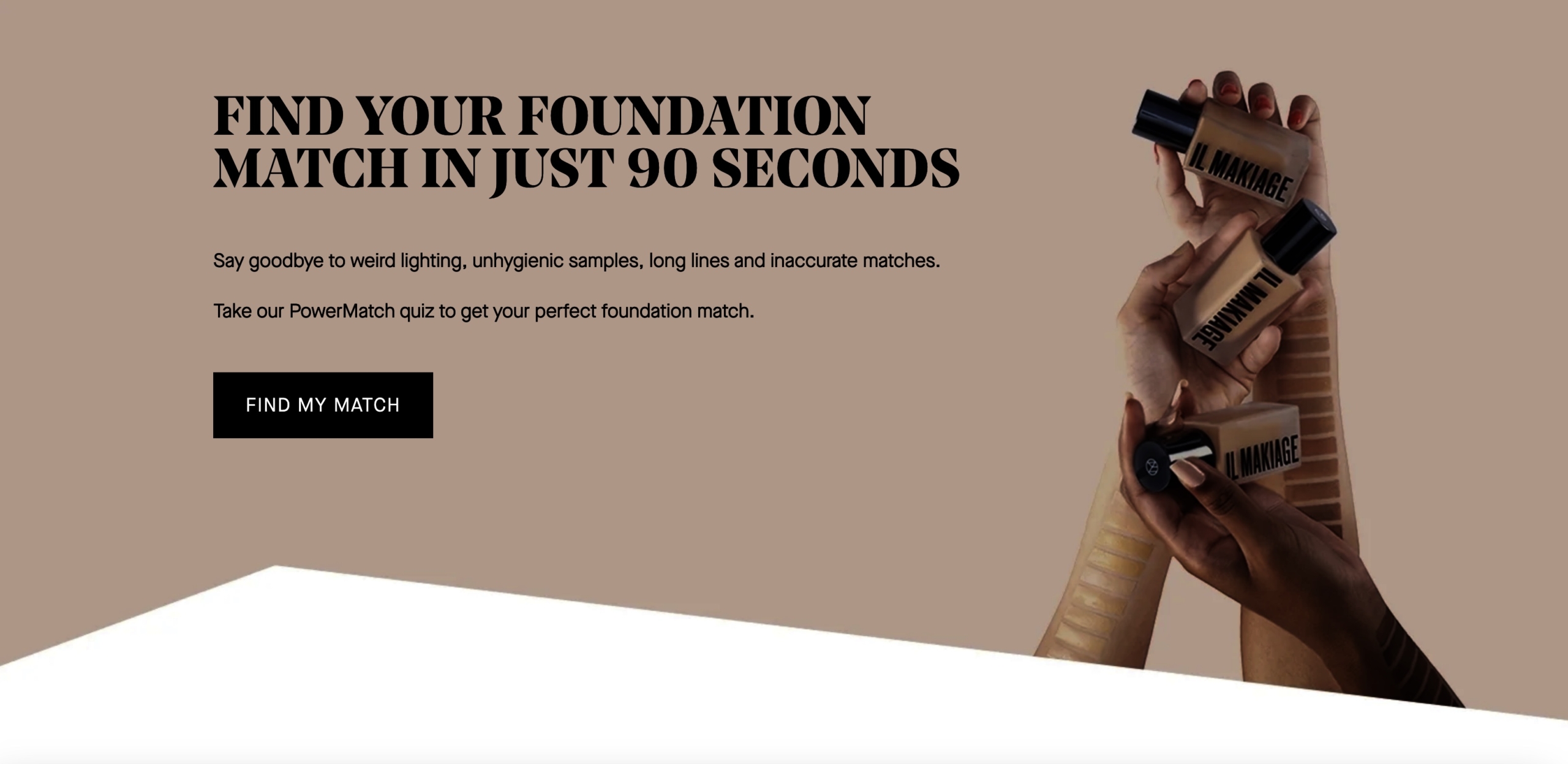
At the center of Oddity’s model is Try Before You Buy (TBYB), a structure designed to reduce the friction of purchasing products consumers typically hesitate to buy online. Rather than paying upfront, customers receive the product, use it at home and are only charged if they decide to keep it.
In a Beauty MarketingIQ post on Oddity, Pascal explains that the approach taps into what behavioral economists refer to as ownership bias. When a product is physically in a consumer’s hands and part of their routine, returning it requires effort and retaining it becomes the default.
In its earnings, Oddity disclosed that approximately 70% of its 2025 revenue came from repeat customers, with cohort repeat rates exceeding 100% on a 12-month basis, indicating that existing customers increased their spend over time.
“TBYB works best in categories where people are afraid to buy online,” says Pascal. “Where they think, ‘I need to see this in person first.’ Foundation is the perfect category.”
For foundation specialist Il Makiage, the model proved especially potent. By pairing TBYB with its shade-matching quiz, which the company reports draws on hundreds of thousands of data points across more than 700 skin tone combinations and has been completed over 25 million times, the brand was able to convert a category historically dependent on in-store testing into a scalable online acquisition machine.

Meta’s Game-Changing Algorithm Shift
The system relied heavily on paid digital acquisition, particularly Meta, the dominant channel for beauty advertisers. For years, Oddity used its quiz and TBYB model to convert traffic efficiently, maintaining relatively low customer acquisition costs. But the system was contingent on Meta’s algorithm, and Oddity was caught off guard when it changed.
Referred to as Andromeda by marketers, Meta’s algorithm shift late last year pushed the platform further toward artificial intelligence-based ads. The intent is to improve ad performance by prioritizing higher-quality transactions and surfacing ads more likely to convert. However, the shift can disadvantage ads that signal as delivering lower-quality transactions.
With TBYB, because customers are encouraged to test products before committing, product return rates are structurally greater than in traditional e-commerce. Pascal estimates product return rates in beauty are often around 4%, but Oddity’s model probably produces significantly higher levels.
Andromeda’s impact was pronounced. Oddity reports its acquisition costs rose to levels it had never experienced, making first-time purchases unprofitable and eroding its earnings before interest, taxes, depreciation and amortization (EBITDA). The company was forced to reassess how aggressively it could acquire new customers.
Timing compounds the issue. The first half of the year is typically when beauty brands invest most heavily in acquisition, building cohorts of new customers who go on to drive repeat purchases in the second half. The holiday shopping period tends to account for 30% or more of beauty brands’ annual business. Even if acquisition costs normalize, a smaller cohort of new customers limits repeat revenue later in the year.
Oddity’s Model Adjustments
Oddity has moved quickly to respond to the disruption, identifying the issue in late January and taking steps to stabilize performance. Part of its response involves rebalancing the prominence of TBYB. On an earnings call, CEO Oran Holtzman emphasized TBYB is “not a dependency,” and that the company can shift toward a more traditional purchase flow if needed. The company has continued to invest in customer acquisition despite elevated costs.
Early signs of Oddity’s response are already visible. In recent months, Pascal has observed that TBYB messaging has become less prominent on Il Makiage’s website, suggesting the company is reducing its reliance on the model without abandoning it.
Holtzman expects meaningful progress in the second quarter and normalization in the third or fourth. He compared the disruption to Apple’s iOS 14 privacy changes, a prior shock to digital advertising that Oddity successfully navigated. The company has demonstrated confidence in its long-term outlook through a $200 million share repurchase program.
Drew Fallon, co-founder and CEO of financial management company Iris Finance and author of the Substack newsletter “Making Cents,” expects Oddity to return to flat growth by the fourth quarter and reach $1 billion in revenue and $156 million in EBITDA by 2028, roughly a 50% increase from 2025 levels.
Still, Fallon, who holds a position in Oddity, cautions the episode may have lasting effects. “I do expect that Oddity will basically never fully recover from this incident on a multiple basis,” he writes. “There will always be some level of overhang when seemingly 30% of your revenue is completely out of your control.”
The Ripple Effects Across Beauty
TBYB isn’t unique to Oddity. While relatively uncommon in beauty, it’s employed by brands including Irene Forte and Boldify. Its limited reach doesn’t mean other brands are insulated from platform changes.
Pascal points out that any model interpreted as lower quality could face challenges under increasingly automated ad systems. He cites high product return rates, atypical conversion paths and inconsistent post-click behavior as factors that can trigger spikes in acquisition costs.
Pascal argues brands should closely monitor how their offers are structured and perceived, and diversify their acquisition strategies rather than waiting for a disruption. If 70% of a brand’s traffic is being fueled by Meta, he says alarm bells should be ringing.
The goal isn’t to abandon Meta, though. It’s to avoid overreliance on it. Retail media networks, connected television, TikTok and influencer marketing are opportunities beyond Meta’s ecosystem.
The challenge is that AI-driven platform disruptions aren’t going away. Even channels like affiliate marketing, long viewed as an alternative to Meta, are becoming more expensive and subject to increasing rules as platforms refine how they interpret performance signals.
Pascal notes that advances in generative AI are accelerating the speed and scale of creative production, enabling brands to produce a high volume of ad variations at a fraction of the time and cost, but he expects that edge will be temporary. As platforms adapt, including through new safeguards around AI-generated content, performance marketing dynamics could shift again, with implications for acquisition costs and how brands allocate resources.


Leave a Reply
You must be logged in to post a comment.