Eco-Conscious Founders Face A Consumer Backlash, But Remain Optimistic About Sustainable Beauty’s Future
Sustainable beauty’s recent heyday, which peaked in the late 2010s and early 2020s as refillable, plastic-free and solid-format brands gained momentum, now feels like a different era. Inflation, social media-fueled trend cycles and heightened price sensitivity have increasingly pushed planet-forward positioning to the sidelines, forcing eco-conscious brand founders who never viewed sustainability as a marketing hook to rethink how they stay relevant with consumers and retailers.
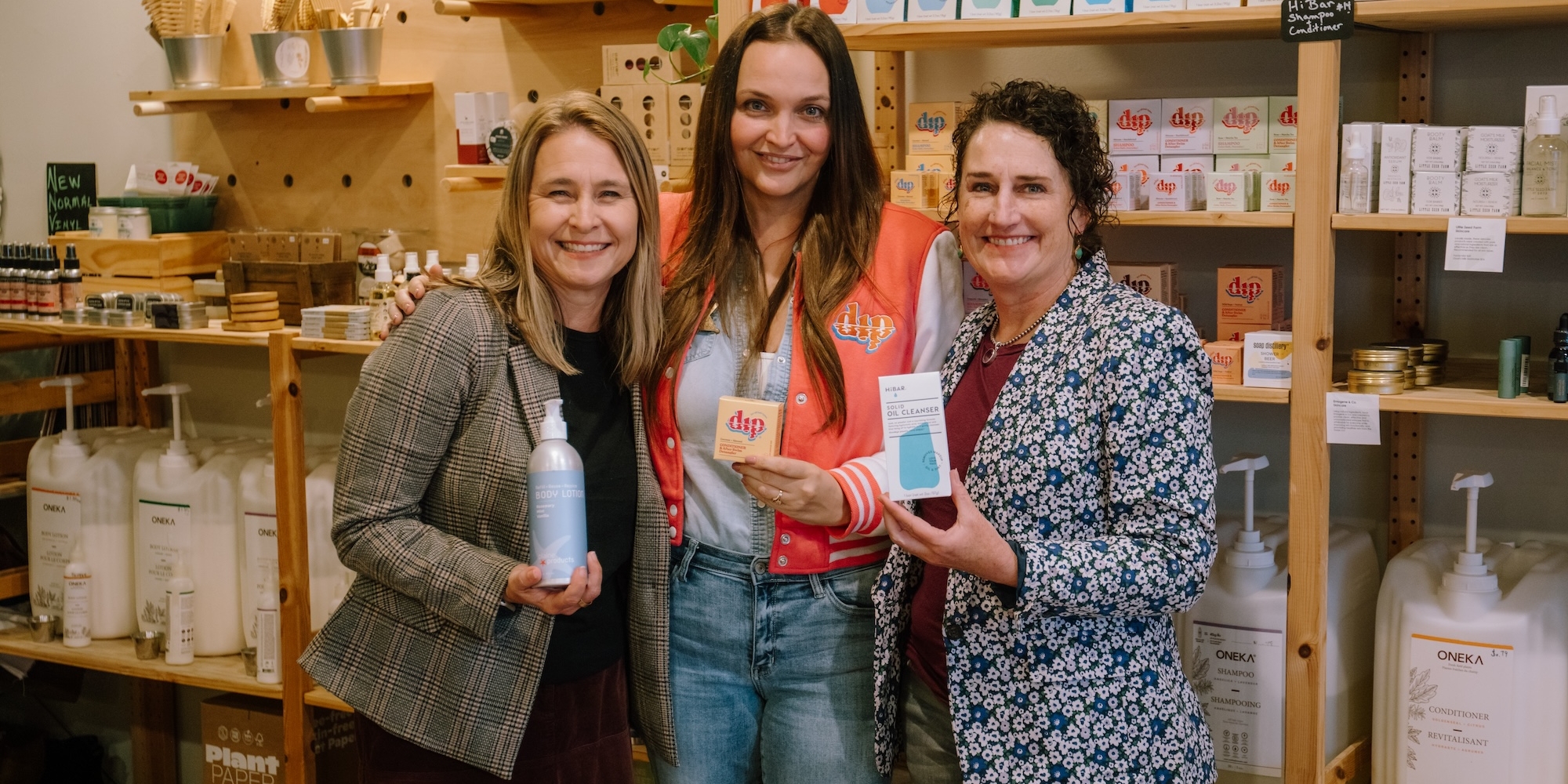
Rather than pull back, Kate Assaraf, founder of Dip, joined forces with Nora Schaper, president and founder of HiBar, and Lindsey McCoy, co-founder and CEO of Plaine Products, to host 30 independent retailers in Nashville last month at the Hair Ties Summit for a candid discussion about how sustainable beauty brands can survive and succeed in a tough environment.
“I’m optimistic about the future of plastic-free haircare because I think there’s a pendulum,” says Assaraf. “I’d say 2020 to 2022 is where sustainability was hot, then you see the pendulum swing when TikTok Shop came around and everyone was churning out fast-to-consume brands. I think people are going to sit in their pit of stuff and look around and be like, you know what? I’m going to go the other way. I’m going to buy less. I’m going to buy better things.”
Plaine Products launched in 2017 as a direct-to-consumer brand built around refillable aluminum bottles for shampoo, conditioner and body care, taking packaging back to wash and reuse in a closed-loop system. HiBar, available at Target, introduced solid shampoo and conditioner bars in 2018 before expanding into deodorant, face wash and body wash. The brand is dedicated to eliminating plastic through high-performance solid formats. Founded in 2021, Dip entered the market with a concentrated shampoo bar and deliberately tight distribution focused on independent retailers.
“There’s a loneliness to entrepreneurship that transcends being a brand owner and also a store owner, and there’s a camaraderie to us all navigating the strong headwinds of the economy right now,” says Assaraf. “We share a lot of the same retailers, we share pretty much all of the same values, and I strongly believe that community doesn’t have to exclude competition.”
We sat down with Assaraf, Schaper and McCoy to talk about the challenges their brands are facing and why they remain optimistic about sustainable beauty’s future.
What did the Hair Ties Summit involve?
McCoy: We talked a lot about, as three brands, how we all bring something to the table. We see ourselves as being able to provide a broader range of options for people, not as competition, not as you should carry one or the other, but how and why you can carry all three and the importance of making the sustainability movement bigger and more welcoming by providing different options for people and meeting them where they are in that journey.
Assaraf: With the whole event, I wanted to fight that idea that Dip and HiBar are not compatible, not friends, and same with Plaine. People would be surprised how networked the sustainable entrepreneur web is. We’re trying to show that there is this unity behind the scenes that people don’t really get exposed to. You don’t see Sun Bum and Supergoop hanging out together, throwing mutual parties. There’s something really cool about the newness of what we were trying to do and how effective it was.
How would you describe your brands?
Assaraf: Dip is amazing haircare that just happens to be eco-friendly. I don’t like to put the eco-friendliness first only because I find that the market is starting to develop an aversion to eco-friendly as the front runner call-out. Dip is intended to take people away from ultra high-end haircare that’s sold on salon shelves. That’s where we say our spot is.
Schaper: We say salon quality haircare that’s solid, so same kind of approach. It’s definitely the effectiveness that gets people to convert, not the eco aspect of it.
McCoy: I echo that. With these stores, we describe ourselves as that bridge for people who aren’t quite ready to go to a bar, but who want to move toward less toxic chemicals and more plant-based ingredients. For people who want to get rid of plastic and move in that direction, we’re a gateway. Liquid products make people feel more comfortable and realize that you don’t have to sacrifice your hair to do a little bit better for your health on the planet.
A big part of the summit ended up being us having those conversations with retailers because, when you’re a small independent business owner, you don’t always have time to get up to speed on every brand’s every product. It was great to just allow us to help differentiate for them and provide that education.
Changing consumer habits and reducing the amount of plastic works best at scale. The more volume you have, the more people you have shopping at these independent stores, the more people are looking for these kinds of solutions, the better for all of us. It helps all of us to bring more eyes to the plastic issue. It makes sense for us all to work together on that.
You mention consumers seem to now have an aversion to the terms “eco-friendly” and “sustainable.” How do you respond to that?
McCoy: For Plaine Products, we’re working with creators to make sure they are trying the products and talking about their authentic experience.
Assaraf: For our marketing, we’ve never really pursued specifically the eco-friendly customer because a lot of the eco-friendly customers were already using HiBar, and I’m not trying to take people away from them. I’m trying to convert other people that Dip can solve a problem for. Our marketing hasn’t had to change, but it is just something that I’ve noticed in consumers that they’re abandoning sustainability as their disposable income shrinks in this economy.
What are conversations like with retailers these days?
Schaper: I can speak to some of the bigger grocery chains. They’re moving away from sustainable haircare. Solid concentrated shampoo is three bottles worth of shampoo, and it does not turn on a grocery shelf the way a plastic bottle turns on a grocery shelf, and grocery stores are into making money. For us, that’s been really hard to see and take. That has been really terrifying from a mission perspective.
Assaraf: As the mass market moves away from sustainability, it’s important to be where sustainability still thrives, mostly because sustainability isn’t really a tone of voice or a trend for us; it’s a set of behaviors. These specific retailers that we brought in have endorsed that set of behaviors, and it’s important to keep them alive and thriving, especially as the mass market for sustainability contracts.
McCoy: I just want to highlight what Nora said. There is this false narrative that sustainability is inherently more expensive. All of our products are incredibly concentrated and last a long time. The initial price point may look a little higher than a $4 bottle of Suave, but it’s going to last you so much longer and you’re not turning it upside down and dumping two gallons in your hand every time you use it.
Schaper: And your hair health is improving. The part I find so amazing is that crap shampoos actually are not good for your hair. When you start using a product with really high-end ingredients and your hair health improves and you need fewer other products, that’s a sustainability movement right there.
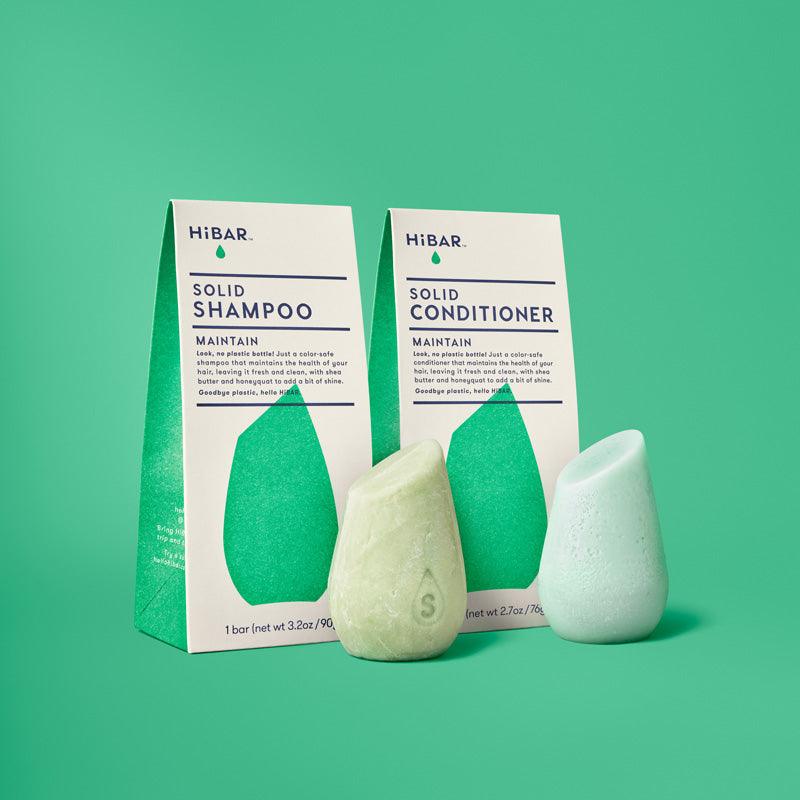
How does HiBar perform at Target?
Schaper: Our Target sales have fallen off the cliff. I think nobody is buying our product at Target right now. To be honest, when I heard Ethique was going into Target, I’m like, that is tone-deaf because the audience that would buy our products at Target is not shopping Target right now.
Assaraf: Even in the heyday of Target, you saw Hey Humans, a plastic-free brand, go in and come out pretty quickly. Ethique was there before and came back out. I don’t know whether the mass consumer is worth trying to convince in this economy because sustainability is automatically perceived as more expensive.
We are now seeing that there’s a consumer backlash against sustainability. At mass, that’s what happens. Even when it’s priced and accessible, the Target customer isn’t looking for sustainable options. I hope Ethique can prove us wrong, and I hope that they prove the mass consumer right.
Where do you see the future of sustainable haircare? What keeps you optimistic?
Schaper: One, it actually works better, depending on the brand, but also microplastics in human health is a really hot topic, and we are finding that people are very concerned about microplastics. So, we can talk about being plastic-free from that angle, but not the eco-friendly angle.
McCoy: And I think, too, the movement toward looking for authenticity. Right now, we’re in this AI [moment], fake this and fake that, and nobody can tell what’s real anymore. People are going to start swinging things back the other way.
Assaraf: As the erosion of trust is growing—that’s really what we’re dealing with right now—people are looking for real answers in the explosion of AI. They’re looking for human-to-human accountability. They’re looking for a way to combat digital pollution and ChatGPT, UGC scripts.
Independent retailers are going to be the source of trust for consumers. Going into a Sephora, you don’t really get the personalized experience that you used to get. Independent retailers, especially beauty retailers that stock Dip, HiBar and Plaine, are going to be the next influencer in beauty.