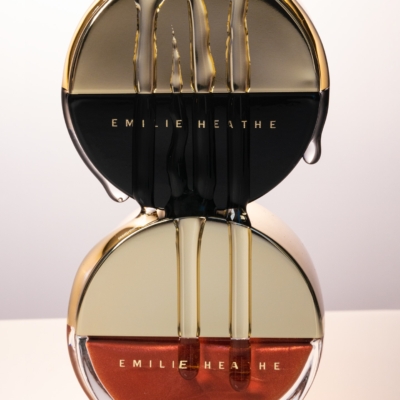
As Emilie Heathe Shuts Down, Its Founder Lays Out 6 Tough Realities Of Building An Indie Brand

Even as Emily Heath Rudman was winding down luxury clean makeup and nail brand Emilie Heathe, she held out hope for a last-minute savior in the form of an investor, a strategic buyer or a burst of virality that would spike sales. “This was a lifelong dream,” she says.
But the market for indie brands had become far tougher since she launched Emilie Heathe in 2017. Investors were prioritizing profitability over brand-building, and virality was no longer a reliable business model. Rudman had seen that firsthand. A TikTok video she posted that reached 8.6 million views didn’t meaningfully change Emilie Heathe’s trajectory.
The new playbook rewards a narrow set of winners that can juggle rapid growth with profitability, virality with longevity, and physical retail with direct-to-consumer and Amazon. Heath Rudman ultimately decided Emilie Heathe couldn’t make that equation add up.
“Getting into retailers now, it’s not about press. It’s what’s your TikTok following? It just became unsustainable,” she says. “I think that it’s very easy to tell people what they need to do to grow and be successful. It’s extremely hard to execute. I mean, posting one TikTok video may take four hours to edit, but then how am I supposed to operate a business and take care of my family?”
Rather than file for bankruptcy, Heath Rudman chose to manage Emilie Heathe’s shutdown herself, negotiating settlements with roughly 50 suppliers and clearing remaining inventory through bulk sales and nonprofit donations. On June 13 last year, she held a “sunset party” to mark the brand’s end and her own transition from it. “I went through a very long mourning process, and it was a lot of ups and downs,” she says. “I wanted to close it out, and it made it more official for me.”
With Emilie Heathe’s closure official, Heath Rudman, who now advises indie brands and previously consulted for companies including Bobbi Brown and Briogeo Hair Care and served as an associate brand manager at Avon, shares the lessons from Emilie Heathe’s experience that she believes could benefit founders confronting many of the same challenges.
It Takes 10X More Money Than You Think
People told Heath Rudman repeatedly that it would take more money than she thought to scale a beauty brand. Now, she tells other founders the same thing, and magnifies the old adage. She estimates it takes “10 times” more than you think. For a brand like hers to be successful today, she figures it would require at least $5 million to $10 million in capital. She launched Emilie Heathe with less than $200,000.
High minimum order quantities and prolonged cash flow cycles contribute to the investment needs. “You have to make thousands and thousands of units, and it takes a long time. I have to develop, then I have to place my order, then it takes six to nine months to get the product out there,” explains Heath Rudman. “Then you have to market and sell it, and you’ve got shelf life and have to run tests. So, it’s like a year and a half to two years before you see revenue to cover what you’ve already spent.”
At A Contract Manufacturer, Small Brands Aren’t The Priority
Heath Rudman warns that it’s difficult to find a manufacturer with deep expertise that will treat a small brand as a priority. High turnover at manufacturers means that, even when a relationship is established, the person managing the account may not be there long.
To protect product quality, Heath Rudman worked with manufacturers vetted by the likes of L’Oréal and Estée Lauder—facilities with stringent protocols and experience serving global brands. The tradeoff, she notes, is higher minimum order quantities and less attention for smaller clients.
“When you’re working with a contract manufacturer, you’re not a priority, especially as a small brand,” says Heath Rudman, who recalls visiting Emilie Heathe’s manufacturer every day during a lipstick run to make sure caps were placed correctly. “Things take forever, but there’s all these things that are not really their fault. There could be ingredients that you can’t source anymore because the supplier of the raw ingredients stopped making something.”

Look At Early Retail As Marketing Rather Than A Sales Engine
“One of the first pieces of advice I got pre-launch was to focus on my distribution, and I always had that in the back of my head,” says Heath Rudman. “As a founder, you’re so focused on just the fact that you’re launching the product that you don’t really have a lot of time or bandwidth to think about distribution, but you absolutely do have to think about it. It’s not easy to get.”
Emilie Heathe landed at retailers such as Neiman Marcus and Violet Grey. Its wholesale placements delivered brand credibility more than sales. The brand tested a 10-store rollout at a national beauty specialty chain, which helped in pitching other retailers, but as a smaller name without broad consumer recognition, it struggled to stand out and propel meaningful volume.
“We spent the tens of thousands to support it, and I think you probably need a bit more than that,” says Heath Rudman. “You really need a team training staff at all the locations. Without that training, no one is able to sell your brand.”
That level of investment isn’t a guarantee. “I’ve talked to brands that use a big sales force and still don’t get the attention,” says Heath Rudman. “Their message doesn’t always come through. It’s always a push and pull. You don’t know what the right direction is.”
A brand’s direction can be influenced by retailers pushing its product roadmap as well. Retail buyers and consultants often encouraged Emilie Heathe to expand into new categories or shades to fit assortment strategies. The expansion didn’t necessarily make sense for its business.
“We were told we needed to launch a blush if we wanted to be in certain doors,” says Heath Rudman. “But the formula didn’t work in those colors, and we weren’t ready. Every new SKU splits your customer and adds cost.”
Emilie Heathe’s record at retail changed Heath Rudman’s perspective on it. Rather than view it as a sales channel, she began to see it as a form of marketing for awareness and not significant sales. She also reconsidered the concept of branded stores.
“The sales I was getting from retailers was minimal, and I was throwing all this money into ads and influencers,” she says. “When I looked at the model for opening a store, if we had the right location and the right product, the financials actually made more sense to me, if we were successful.”
Build A Capital Stack
A key takeaway from Emilie Heathe’s journey is the importance of lining up multiple sources of capital. From the start, Heathe Rudman avoided venture capital, preferring to keep the brand free of the financial pressures of investors. Instead, she pieced together a mix of self-funding, friends-and-family support, bank loans and inventory financing to cover production runs and operating costs.
That strategy was tested when several funding avenues faltered simultaneously. Heath Rudman launched a crowdfunding campaign on Republic with the goal of raising a six-figure total and applied for a bank loan backed by the Small Business Administration. A separate bulk inventory sale to shore up Emilie Heathe’s balance sheet was in the pipeline, too. None of them came through. Together, the setbacks erased more than $100,000 she had been counting on to cover payroll and operating expenses.
Looking back, the episode reinforced Heath Rudman’s assessment that funding diversification is crucial, particularly for small companies with extended production cycles and sizeable inventory loads. Capital, she argues, must be built as an ecosystem and can’t be a single lever. “You should have all the things: some debt, some investment, some friends and family,” she says. “That’s how we were trying to make it work.”

Attention Alone Isn’t A Business Model
Through the course of running Emilie Heathe, Heath Rudman realized that not all visibility is created equal. While social platforms can deliver spikes of attention, long-term discoverability, particularly through Google search, proved to be a more reliable driver of sales.
Early on, the brand invested in Google advertising and public relations to instigate press coverage, a combination that stoked organic search performance through backlinks from known publications.
A TikTok video might garner millions of views in a day, but it does not necessarily translate into lasting demand or repeat purchases. Heath Rudman advises founders to prioritize channels that build durable visibility, such as search and selective influencer partnerships, rather than chasing every new platform that promises attention without a clear path to conversion.
“There were times where we turned off PR and times where we turned off ads,” she says. “We still had people coming in from Google, and I know that’s because we had very strong organic reach. Press has this thing called backlinks. If a big outlet writes about you, it helps you rank higher in search. That’s something that keeps working for you.”
Closing Well Protects Cash And Credibility
As Emilie Heathe wound down, Heath Rudman learned that excess product was trickier to move than she expected. She explored inventory liquidation vendors, but found them slow and low-yield, a process that tied up time without generating much cash.
Instead, the brand leaned on bulk buyers such as FabFitFun to move volume and cover operating costs. For the rest, Heath Rudman partnered with nonprofits including Glam for Good to donate product, a move she says helped control where the brand’s goods ended up while reducing warehousing expenses.
Shelf life added another layer of risk. Some inventory expired before it could be placed, forcing the brand to destroy product that had already been paid for. “Once it hits that point, it’s just gone,” she says.
For Heath Rudman, moving inventory responsibly became part of what it meant to close the company cleanly, tying the clearance of product to settling accounts with suppliers and employees and protecting the brand’s reputation. She notes that inventory is a liability with a clock attached.
“You don’t just shut the lights off,” she says. “You have to think about where everything goes and who it affects.”





Leave a Reply
You must be logged in to post a comment.