
Raised in a household that preferred wipes over toilet paper, Emily Griminger didn’t understand why her friends stocked up on toilet paper. “I grew up playing sports and running around,” she shares. “The best way for me to feel clean was to use wipes.”
After nine years at UBS working in wealth management, product development and content messaging, Griminger packed up her New York City apartment and moved to Los Angeles in 2019 with a mission: to bring that clean sensation to the masses. The result? Semmi, a premium, personal-care wipes brand she launched in August with $150,000 from her personal savings, including from 3,500 hours of dog walking. “I like to think of all the furry friends as my early investors,” she jokes.
Like any startup, it’s a risky investment, but one that has precedence. This year, Dude Wipes, which generated $220 million in 2024 sales, swiped a minority investment from private equity firm TSG Consumer, and Wype, maker of a gel that turns toilet paper into a sustainable wet wipe alternative, raised roughly $1.4 million. The global flushable wipes market hit $3.1 billion in 2024 and is expected to increase at a compound annual growth rate of 5.6% to $5.3 billion in 2034, according to market research firm Global Market Insights. Within beauty and wellness, butt care is a budding category.
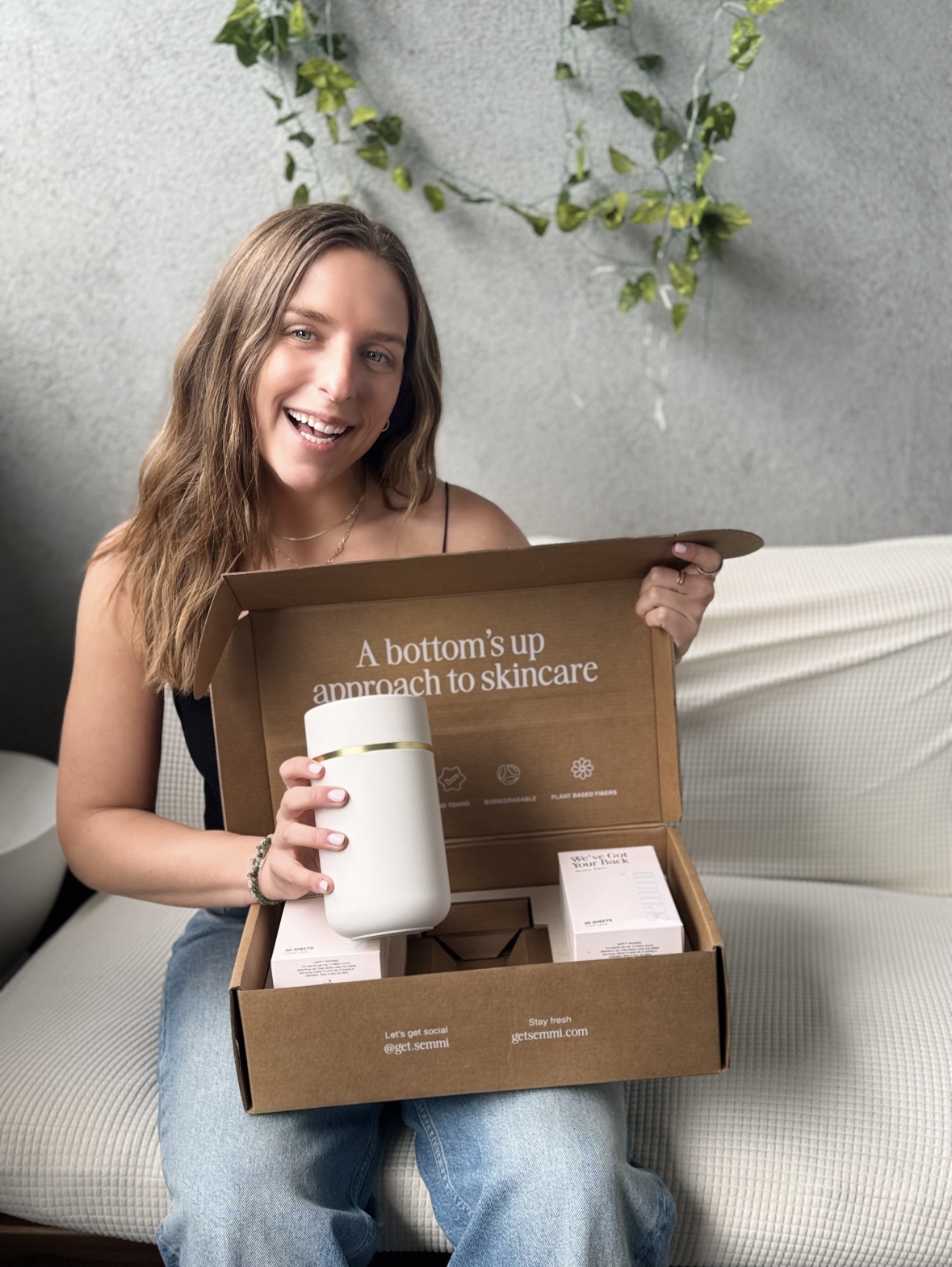
Having used wipes her entire life, Griminger has strong opinions about them that informed Semmi’s version. She didn’t want wipes that were overly saturated or clunky packaging. “[Most wipes] are very, very wet, almost to the point that you feel wet after using them,” she says. Speaking of packaging, she continues. “When I would rip a wipe out [from another brand], I would get several at a time and then I’d be pushing them back in. It just felt awful and kind of dirty stuffing them back into the same pouch.”
Design was another major motivator for Griminger. “I was living in New York and had wipes on the back seat of my toilet,” recalls Griminger. “It was so embarrassing to me when I had people over. I would hide them and then the next day, I would go into my bathroom and search for them. It suddenly dawned on me: We talk about skincare as it relates to the face, but not necessarily the hygiene aspect of it.”
Using dry paper can leave residue, lingering bacteria and skin irritation. “As women, I felt like we deserved something better. Something that was not embarrassing to leave on our shelves or floor,” Griminger adds. “I wanted [Semmi] to look and feel like a skincare bottle.” To achieve this, the reusable dispenser, intended to be seen, comes in three different colors and in no way resembles a traditional wipe canister. “We believe your bathroom routine should feel just as good as your skincare lineup,” the founder says.
“We believe your bathroom routine should feel just as good as your skincare.”
It’s tricky to create a single-use, flushable wipe that tears cleanly, but Griminger drew inspiration from Clorox wipes. “The manufacturer has to roll and slice the wipes a specific way,” she says. “It’s almost like a sushi roll. You roll the whole thing and then cut.”
By adjusting the cutting and rolling technique, Semmi’s manufacturer was able to adapt its existing machinery without the need for costly retooling, a lucky break for a first-time founder. She ordered 20,000 units, a minimum order under the manufacturer’s usual amount. Semmi wipes are flushable and biodegradable.
The Semmi Set, priced at $48, contains a reusable dispenser and two 50-count packs of wipes. Refills are $16. A $40.80 subscription plan delivers 100 wipes every eight weeks, with 15% off each recurring order. Single purchases are $48 for 100 wipes. Travel packs are $12.50 and made for those chronically on the go. Semmi’s core customer is women aged 25 to 45 years old, and it plans to secure distribution at locations such as gyms and fitness studios, especially those without showers.
The brand is hitting the market as some jurisdictions are trying to wipe out flushable wipes, particularly those with plastic, which Semmi avoids. Beginning in December 2026, wet wipes with plastic in them will be banned from Wales, and England, Northern Ireland and Scotland are following suit. Spain is considering a ban on them. According to the Spanish Association of Water Supply and Sanitation, wet wipes are among the top 10 most common single-use plastic items found on European beaches, and clearing them from sewer and water systems costs an estimated 230 million euros or about $267 million annually.
With those stats in mind, Griminger made sure Semmi passed all seven flushability tests outlined by the International Water Services Flushability Group (IWSFG), the gold standard in North America and Europe. “The formula can’t contain any plastic,” she explains. “Even though the manufacturer had a base formula, I insisted on third-party testing to ensure the product met every single standard and to make sure what I was saying is true.”
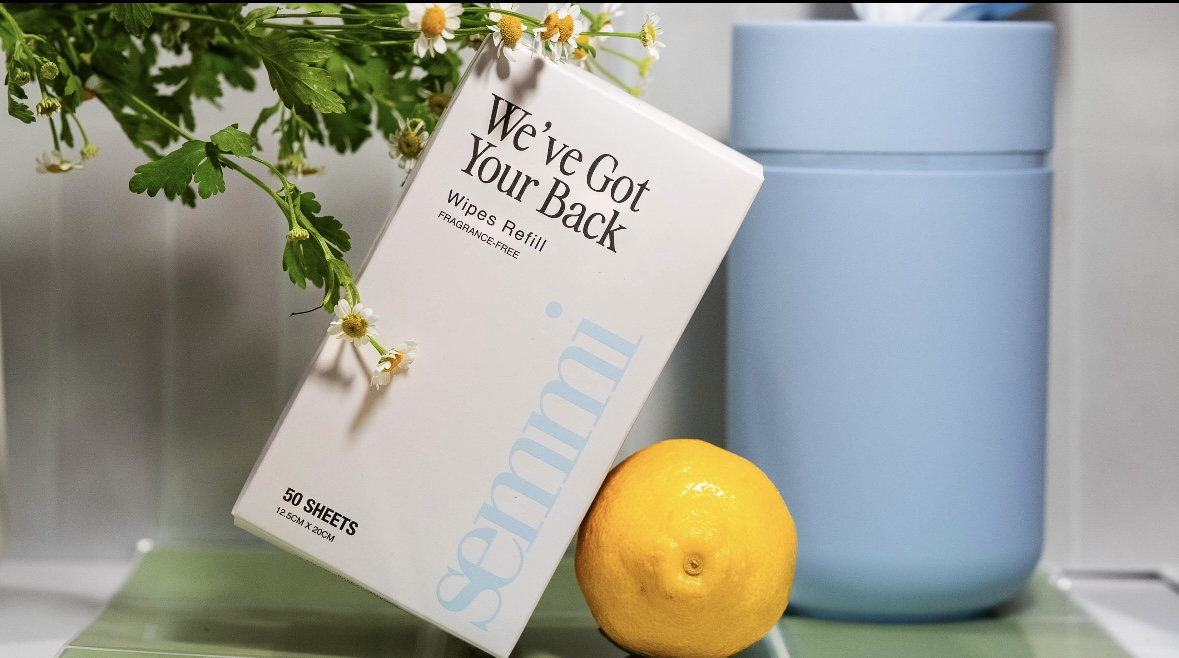
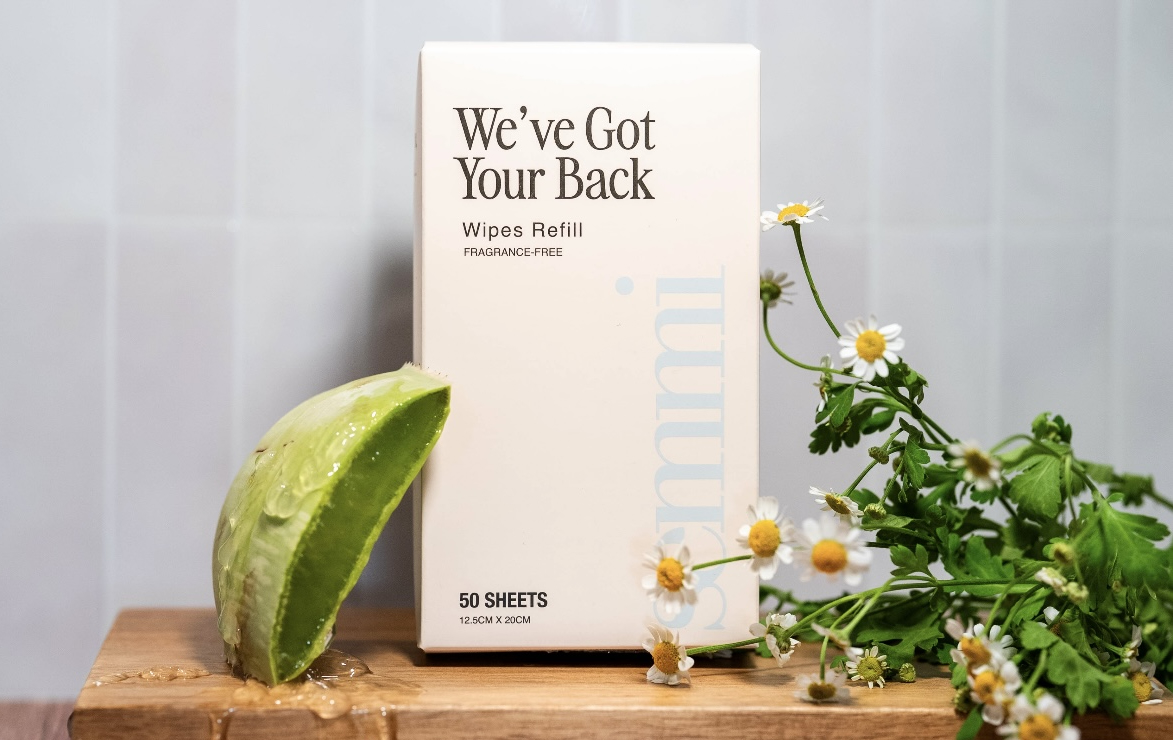
Semmi wipes biodegrade in just over a month, about as fast as an apple core. Free of alcohol and synthetic fragrances, the wipe formula consists of 99% purified water and 100% plant-based fibers along with skincare ingredients like glycerin for moisture, chamomile extract to combat inflammation, aloe leaf extract for soothing and antioxidant vitamin E. Sodium benzoate keeps the wipes fresh and citric acid maintains pH balance.
Griminger says, “Because you’re wiping your behind—and your front—at the end of the day, you just want to feel as clean as possible, without any bacteria buildup.”

Leave a Reply
You must be logged in to post a comment.