Target’s Blueprint For Worn-Down Beauty Consumers: Trendy, Healthy And Affordable Products

Despite a raft of challenges that have sunk its stock 60% over the past four years, Target isn’t pumping the brakes on beauty anytime soon.
Amanda Nusz, SVP of merchandising for essentials and beauty at Target, emphasized last Thursday during a panel discussion hosted by beauty industry organization CEW that the mass market retailer will continue to prioritize the growth of its beauty and wellness aisles. Kevin Wong, VP of merchandising for beauty at Target, and Ryan Beach, VP of merchandising for health at Target, joined Nusz for the discussion moderated by Jill Scalamandre, CEO of Beekman 1802 and chairwoman of CEW. Nusz said, “We’re going to grow space. We’re going to invest into experiences. We’re going to grow in the marketplace.”
Target’s commitment to beauty and wellness comes as its competitors, from Walmart to Amazon, are wooing beauty consumers stressed about their financial situations. In the first half of 2025, the market research firm Circana estimated that mass beauty sales were up 4% compared to prestige beauty’s 2% bump. At Target, however, beauty, historically a bright spot, underperformed in the second quarter. Skincare, bath and haircare eked out low single digits gains for the period. Last year, Rick Gomez, EVP and chief commercial officer at Target, told the publication Women’s Wear Daily that beauty category sales at the chain had doubled since 2019.
More broadly, Target’s second quarter net income fell to $935 million from $1.19 billion, with revenue slipping almost 1% to $25.2 billion. Same-store sales decreased 1.9% year over year. Contending with weakness in sales and profits, Target laid off about 8% of its corporate workforce last week, the largest personnel shakeup to rock the company in nearly a decade. In the summer, Target and Ulta Beauty announced their partnership that started in 2021 would end in August 2026.
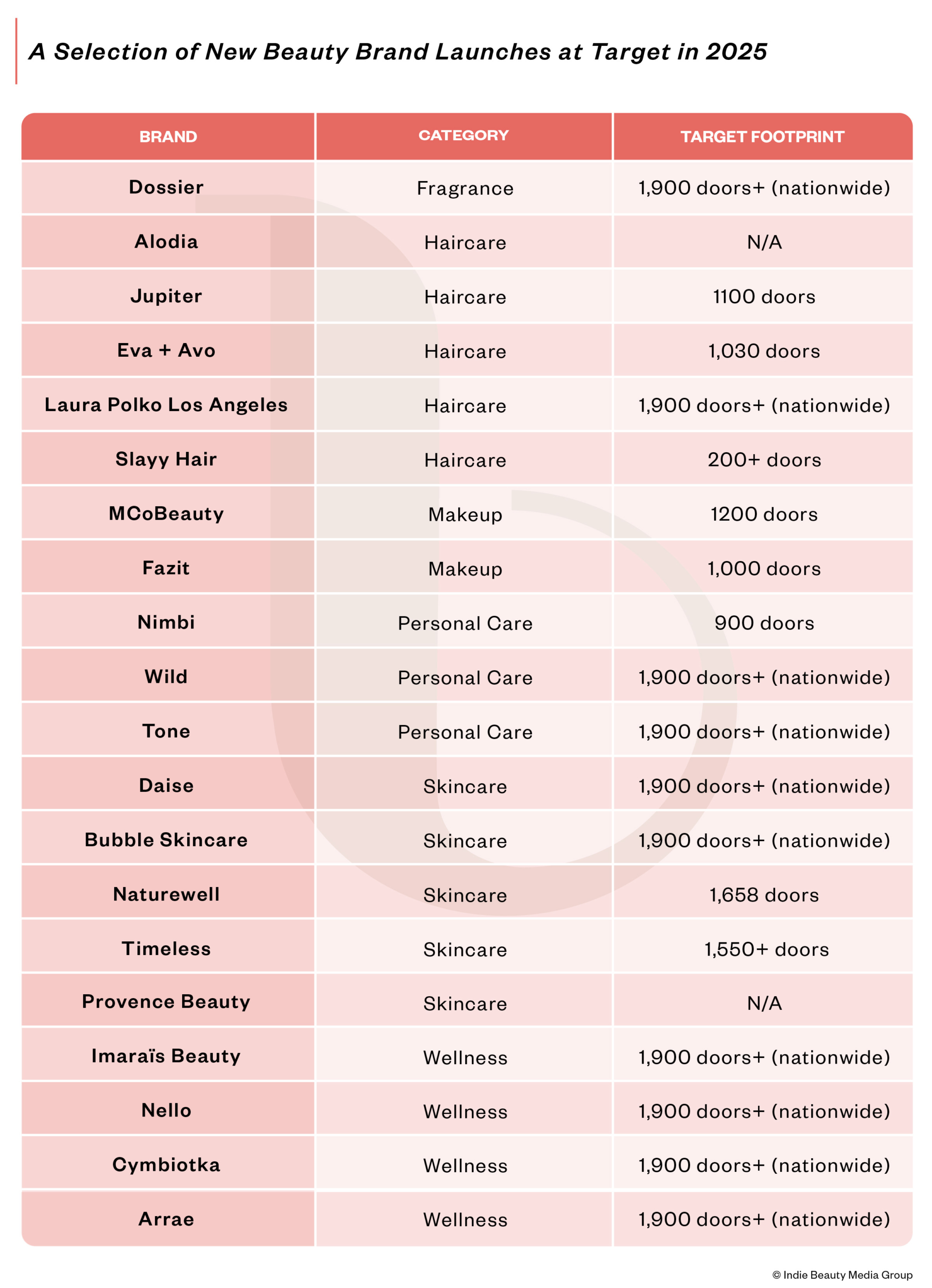
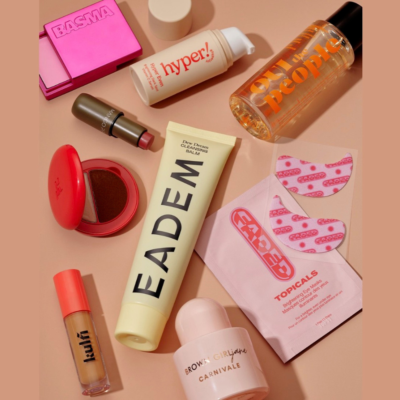
Target’s struggles haven’t stemmed the flow of beauty and wellness brands to its shelves this year. In February, it revealed it would onboard 2,000 new products and 50 new brands, double the amount it added in early 2024, to its beauty assortment, with approximately 90% of their products priced under $20. Among the many new brands it’s picked up are Bubble Skincare, Imarais Beauty, Nello, Nimbi, Alodia, Jupiter, Eva + Avo, SLF, Cheribe, Naturewell, Timeless, MCoBeauty, Wild, Daise, Fazit, Provence Beauty, Ritual, Noshinku, Dossier, Slayy Hair, Arrae, Cymbiotka, Hazel, Mediheal, Man:yo, Beauty of Joseon and Round Lab.
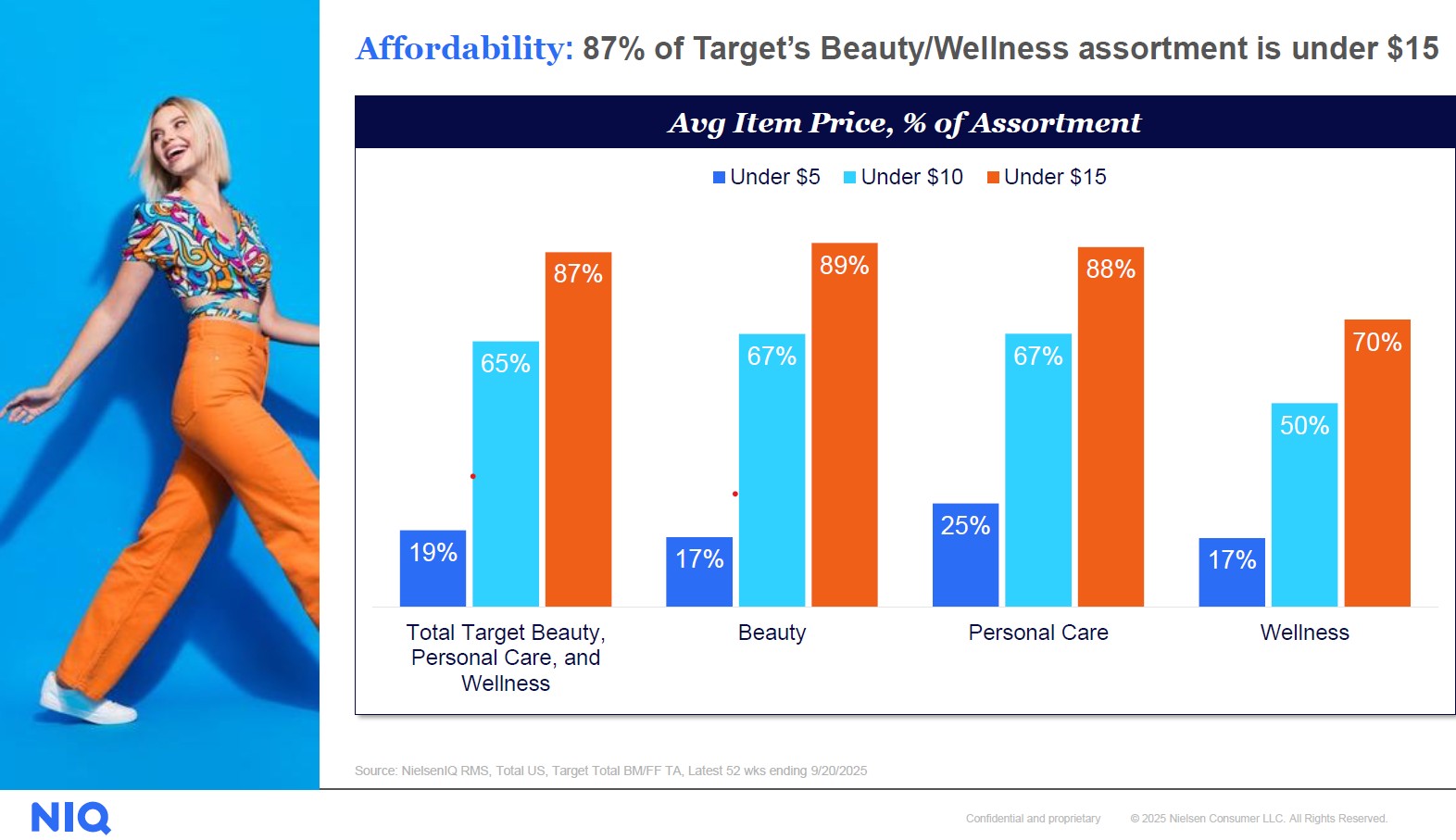
Confirming Target’s focus on affordable products, consumer intelligence firm NielsenIQ finds 87% of Target’s beauty, wellness and personal care assortment is under $15, with 65% under $10 and 19% under $5. Although affordability is paramount, Wong underscored Target’s interest in pricing options as its shoppers tend to shop high and low. Target’s core customers are middle-income, suburban millennial moms. He said, “If the value is there, people are paying for it, and so I think we are going to make sure we protect that choice variety, but really that consistent focus on value.”
Looking to further build its assortment, Target is scouting longevity products, sun care that moves the needle and K-Beauty. While the retailer has been a welcome destination for emerging brands, it’s been tough for those brands to have the storytelling power to break through in a constrained, yet crowded beauty setting. Wong said, “We know the storytelling needs to be brought through in a real physical way and that does take space.”
Like many retailers, Target has seized upon the wellness opportunity, and products packed with protein and greens and for hydration are resonating with its customers. Skincare and wellness products geared toward men are on the upswing, too. Beach highlighted the Target-exclusive launch last year of Papatui, the men’s grooming brand from Dwayne “The Rock” Johnson, causing a halo effect for other men’s brands at the retailer.
“When you have someone like the Rock on TikTok or on Instagram literally washing his face with a cleanser…and talking about his routine, all of a sudden guys were like, ‘Oh, hey, I should do that,'” he said. “And so the approachability of male skincare as that entry point into the next phase of male beauty is something that’s really exciting.”
Beach also mentioned the brand Tone as another example of its attention to men’s. The personal care brand from the YouTube creators and streamers behind the online content group AMP (Any Means Possible)—Duke Dennis, Kai Cenat, Fanum, Agent 00, ChrisNxtDoor and ImDavisss—landed exclusively at Target in the summer. In addition to Tone and Papatui, Ashley Tinsdale’s Being Frenshe, Kourtney Kardashian Barker’s Lemme and Blake Lively’s Blake Brown are celebrity-aligned beauty and wellness brands available at Target. Celebrity hairstylist Laura Polko’s eponymous haircare line, Laura Polko Los Angeles, launched exclusively at Target this year.
But not all brands connected to famous names are winners. Gwyneth Paltrow’s Good.Clean.Goop, a mass-market off-shoot of the actress and wellness maven’s premium skincare brand Goop, failed to gain traction at Target and was recently shuttered. Selfless by Hyram, a skincare brand affiliated with influencer Hyram Yarbro that entered Target in 2023, is no longer sold at the chain.
According to NIQ, 58% of beauty shoppers at Target buy exclusive brands from it, and 66% of those that buy exclusive brands are repeat shoppers. Nusz said, “It is easier and simpler to market an exclusive. It just is…and the reality is it makes news. I also want to make sure that we are doing it better than anyone. Our aspiration is to continue to not only win with newness, which we typically do, but we want to keep really building out how we can celebrate newness in bigger, bolder ways.”
Target is leaning into multibrand merchandising initiatives and events to engage customers at the store level. Last month, it held a Fall Beauty Event concurrently with its New York Fashion Week Style Tailgate event. The event featured multibrand endcaps in 300 stores aimed at helping customers create routines or recreate trends like caring for curls and achieving a dewy skin look. During the event, it staffed a display booth with lip products. Shoppers received a free charm to put on products they purchased.
“We know you’re thinking about this, but when we pull it together in a multibranded way—sometimes single branded—we’re seeing it really resonate. What’s really exciting is we’ve been coupling it with events,” said Wong. “You’ll continue to see us do more of that, but we’re just getting started.”

Leave a Reply
You must be logged in to post a comment.