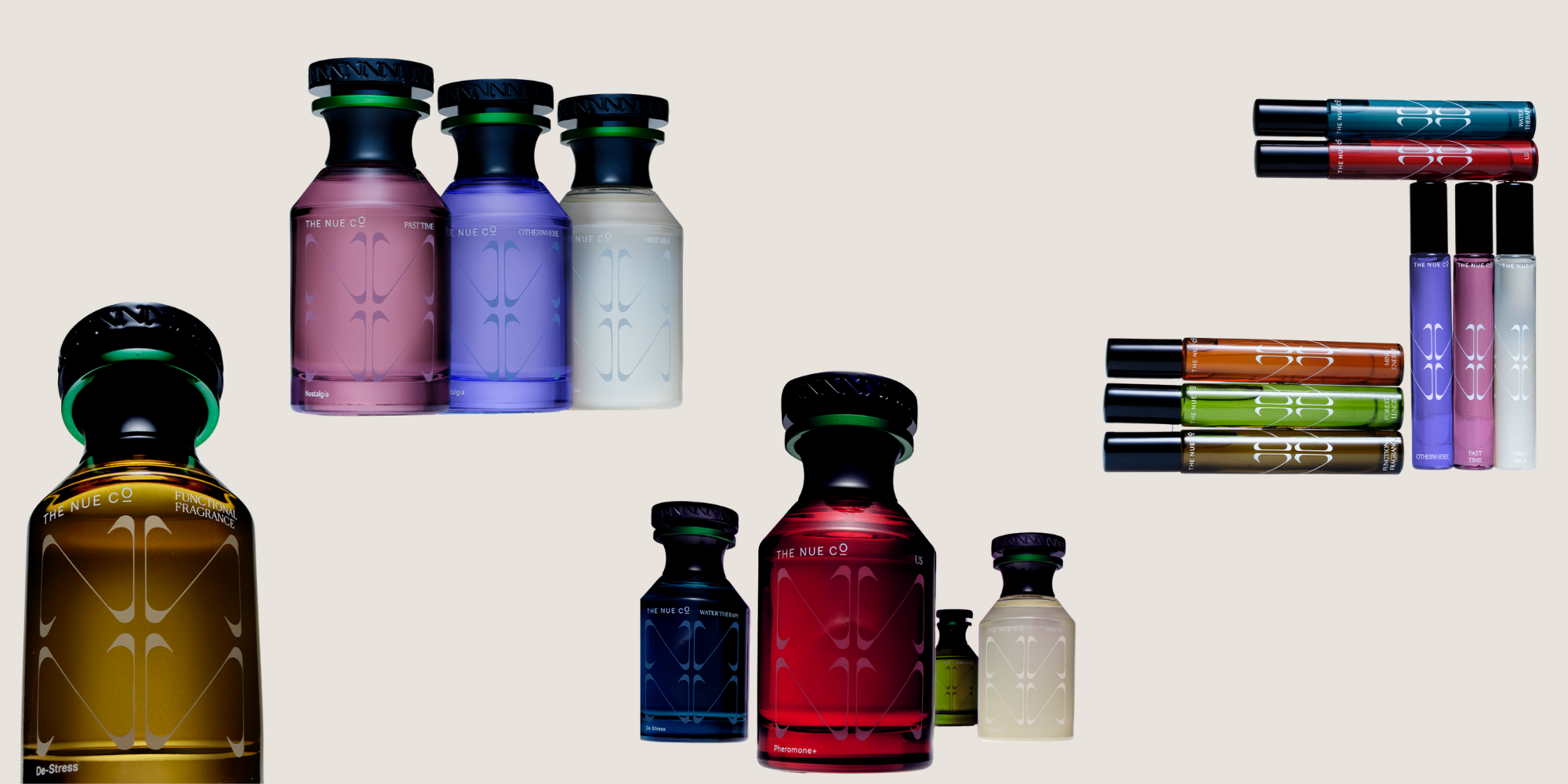
The Nue Co. Defied Investor Advice And Transformed Its Business With Functional Fragrance
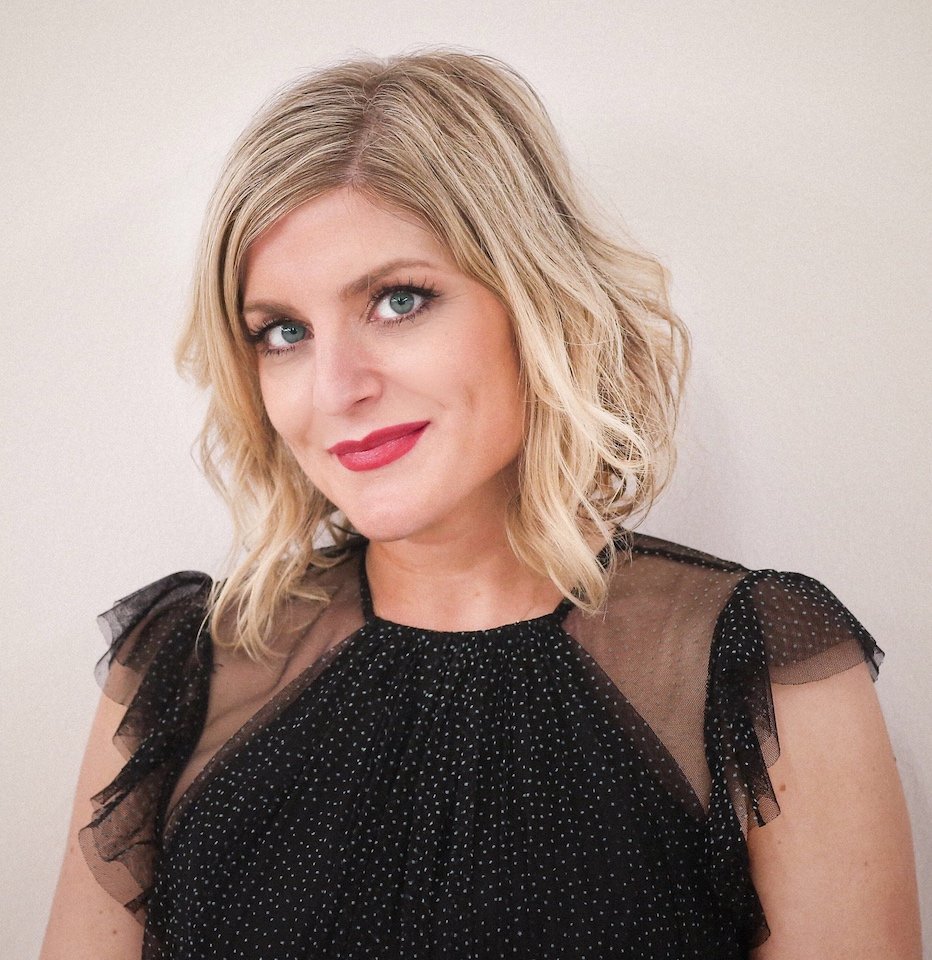
As founders go, there are few as prescient as The Nue Co.’s Jules Miller. She started her wellness-cum-beauty brand with supplements nearly a decade ago, way before “inside-out beauty” was an established subcategory.
She also anticipated the wellnessification of scent with the launch of functional fragrance in 2019. The Nue Co.’s expansion into the category, originally strongly discouraged by Miller’s advisors, has changed its financial picture, setting it on a more efficient trajectory with a stickier customer journey and now an exclusive with beauty’s biggest specialty retailer, Ulta Beauty. The Nue Co., which launched in Sephora in 2021, has raised roughly $36 million from investors such as Pamoja Capital, Unilever Ventures and REDO Ventures, the family office linked to the Geiger family, controlling shareholders of the L’Occitane Group.
Miller’s ability to stay ahead of the curve comes in part from her personal passions. “I’ve always used aromatherapy, acupuncture, essential oils, medicinal mushrooms, looking after your gut health to improve your overall health,” she says. “I’ve always felt privileged that I’m into things like this.”
Beauty Independent spoke to Miller about her brand’s big Ulta moment, what she thinks of the Space NK acquisition, where wellness is heading and much more.
What’s your take on the wellness category’s evolution?
Trends do go through cycles. When we first launched, we had a protein powder named Milk Protein. It was a great product, and people were loyal to it, but there was this aversion to milk because everybody was vegan. The word “milk” put people off, even people consuming dairy. Now, people are buying beef organ protein powder. Everything is a cycle.
The Nue Co. has always tried to translate rituals that have only spoken to a small group of people that are well-educated and in tune with their health and their bodies to the masses, whether it’s reimagining aromatherapy in the context of a functional fragrance or our packaging where we’re trying to get people to fall in love with taking care of themselves.
Wellness started for us as honoring natural ingredients and clean formulas. Today, we’re looking for innovation. We’re thinking about tools and peptides. People are comfortable sourcing peptides from their local dealers and injecting themselves. These were the same people that were fearful of different ingredients a few years ago. There’s been this huge shift.
The beauty industry is bullish on wellness, yet retailers have struggled with the category. Why?
There’s been a lot of excitement around this concept of merging beauty and wellness from a retailer and an investment perspective for a long time. Our investors are L’Occitane, who are a traditional beauty investor. We also have Unilever. Wellness is a category we should all pay attention to. It has incredible retention. Nue Co. was built off the back of extremely loyal customers. It’s almost a no-brainer to want to get involved in the category. That being said, it’s a very difficult category to crack.
I always laugh when people say, “Wellness brands are just here to take your money.” If I was doing it just to make money, I would have launched a makeup brand. It’s a lot easier than wellness because wellness [is] vast in terms of subcategories and so personal to people. It’s not about just putting a brand on a shelf.
That’s not to say that you cannot convert a beauty consumer into wellness. That is our bread and butter, but you need to be aware that a customer who is buying a wellness product needs a bigger reason to believe than someone who’s looking for a cool eyeshadow. You need to invest in education. Majority of the time, you have a waiting period before you can see results.
Educating the staff on the shop floor and getting them to believe in our product requires them to take our supplements for months. It’s a completely different strategy to traditional beauty. This is why Ulta has already been such a meaningful partnership. You have the CEO saying, “This is our growth focus.” They’re really investing in it.
What do you think of the Space NK acquisition?
In the U.K., Space NK is where you discover brands. They’re brand builders. It was a really interesting acquisition because Ulta has been known up until now [as] a growth engine. When a brand is somewhat established, [Ulta] can take it to the next level. What they are proving with the introduction of brands like Nue Co. and other brands in the fragrance space like Noyz and Snif [is that they can be a brand builder]. I think Noyz did $30 million in their first two years at Ulta. I think this is a space they’re going to try to occupy.
It’s strategic because Sephora’s plan right now to see growth is investing in their established brands. They’re reducing their marketing spend overall, but they are going to attribute it to their top-performing brands, which is probably right for them. I think Ulta is going to see a white space, and they can become that one-stop shop where you can get your most loved brands, but it’s also going to become a place of discovery.
Space NK has been doing so tremendously well. It’s great for us because Space NK is our hero retailer in the U.K. We’ve taken a lot of learnings from that partnership. We started off in Body, now we’re in Body & Wellness as well as Fragrance, so we’re dual-sited.
When did your conversations with Ulta start?
Years ago. We’ve been trying to think about what our retail expression looks like. The philosophy of The Nue Co. of whole body health really works for online because you have that person’s attention and you can invest in education, but it’s hard to translate into retail, particularly within beauty, because you’ve got somebody who’s not well-versed in mood, endocrine system, stress, microbiome, and you don’t have a particularly straightforward category or brand proposition.
The first time we launched functional fragrance, I expected it to do absolutely nothing. It was 2019. We were direct-to-consumer. A lot of my mentors and investors told me it makes no sense to talk about stress or mental health because they had nothing to do with wellness.
People forget how fast we’ve moved. Talking about mental health [as part of wellness] is quite new. They were like, “Fragrance is tiny, it’s dominated by big legacy brands, and none of it sells online.” We had a tiny order that we launched just before Black Friday and completely sold out. I realized there’s something interesting here.
After COVID, we launched Forest Lungs and we sold three months’ worth of stock in a week, but it was still a relatively small part of the business because consumer behavior around fragrance was different then. People were buying one fragrance. It became their signature scent. Our fragrance customers behaved differently to our supplement customers. Our supplement customers were buying Nue Co. every single month. Our fragrance customers would buy from us once or twice a year.
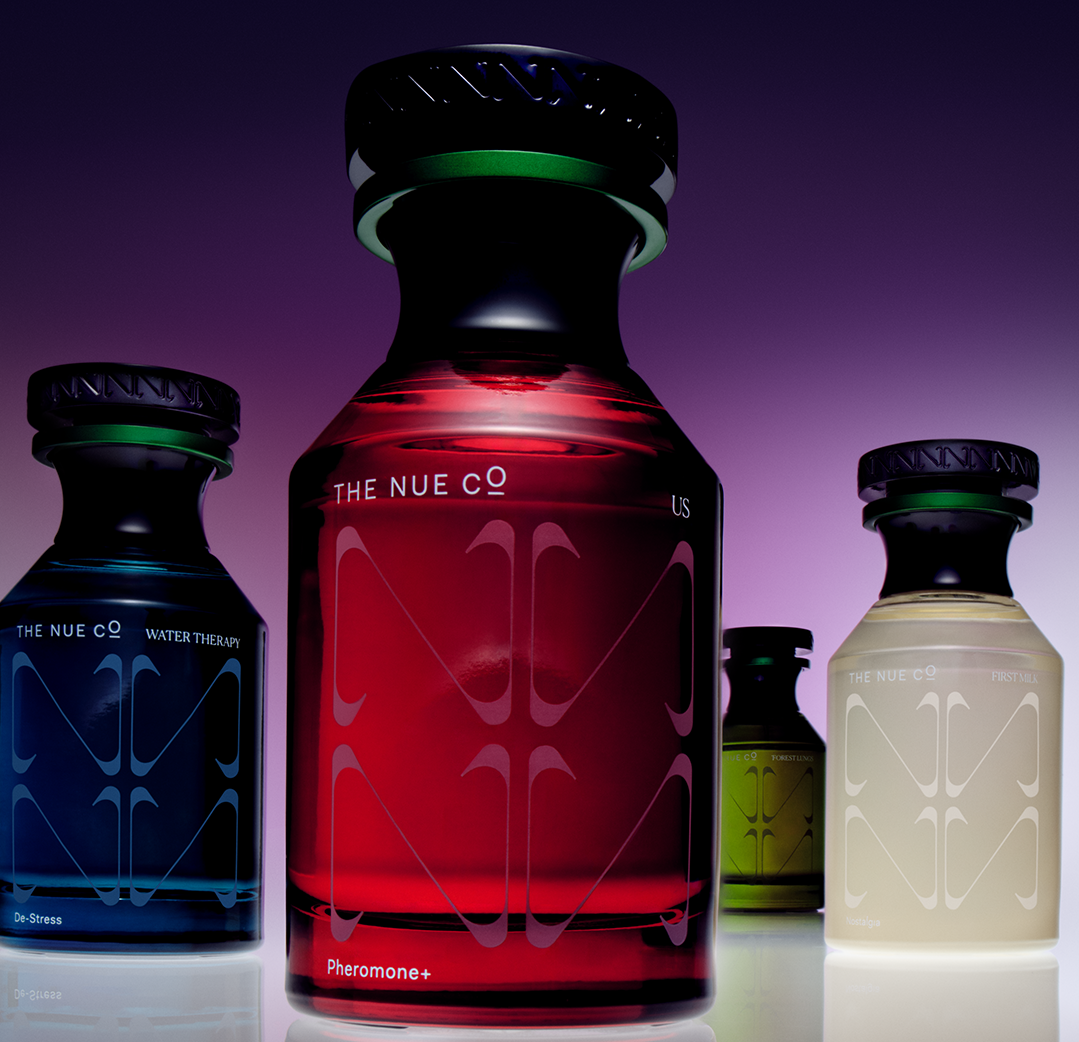
It was over the last year-and-a-half when we rebranded and relaunched the fragrances that we started to see that category explode. It was off the back of people adopting completely different behavior around these fragrances. We talk to a lot more mood states now. Before, we only had stress and we had three fragrances that sat in that. Now, we have six different mood states and eight different fragrances.
It’s interesting to see people buying three fragrances on their first order. People are using these products strategically and intentionally. Now, our fragrance customers have LTVs as high as our supplement customers. Fragrance went from representing 20% of our [revenue] to 45% to eventually 65%. That was when we said we need to start operating in a different way. We need to think about a retail partner. That’s how Ulta came to be.
Did you mourn the move away from supplements?
Supplements are my passion and Nue Co.’s reason for being. They are consolidated because we can’t have 50 different products. We still believe in this holistic approach to our product portfolio. True health really does start in the gut, but your gut is hugely impacted by the way that you feel and your emotions and your hormones.
On our website we’re leading with fragrances, but we still have what we call “methods.” We have our gut method, the skin method and the body method. Yeah, we do cry about the supplements sometimes, but it’s a lot easier running a fragrance-first business than a supplement one.
Why is it easier?
Supply chain and manufacturing. We have to use a special blender for the probiotic bacteria because, if it’s blended too quickly, it could damage the stability. That slows down your supply chain. If you have a really big month, you sell out and then the replen is probably twice as long as your replen time for fragrance. Then, your subscribers are upset because you’re out of stock. It’s particularly difficult when you’ve got lots of different products like Nue Co. had. Fragrance supply chain is a lot more simple. We work with Givaudan and Firmenich from an innovation and a fragrance profile perspective.
Also, there’s the amount of money you have to invest from a marketing perspective to explain to the consumer why this [supplement] is double the price versus the crappy product they’re buying in a supermarket. I believe it’s the best investment you can make for your health, but the reality is the average consumer feels uncomfortable spending beyond a certain threshold for their supplements. Our supplements at Nue Co. were really expensive to manufacture, so our margins were difficult. That’s why I’ve raised a bunch of money. All of it went into product because we wanted to do it right.
[It’s] much easier to market [fragrance] from a seeding perspective. We have this rule where we only work with people that like the product and can see the benefit. That’s an instant thing [with fragrance]. They say, “This really talks to me. I’m obsessed. Let’s work together.” A product like Growth Phase, our hair loss product, we would be working with people for five months before we could even see results.
Our focus right now is acquiring customers through fragrances. Our ROAS are incredible on a fragrance customer, way better than on a supplement customer from a first purchase perspective. We are starting to see a bit of a migration towards the supplements, but it’s slower than we thought.
Originally, we had an email flow where we would acquire a customer through a fragrance and then we would talk about our hero supplement, Pre+probiotic. We’re seeing that fragrance customers feel more attuned to our tinctures. We also have our magnesium supplement [that] comes in the form of a body spray. It has lavender, so it’s scented. We’ve started to see fragrance customers adopt these products online, then once they start using those products, they’re a lot warmer to subscribing to Pre+probiotic. Right now, we’re testing this just online, so Ulta will remain exclusively focused on fragrance.
How long does it take someone to go from buying fragrance to subscribing to supplements?
Probably a year. Moving them onto a tincture is a lot easier. That’s a three- to six-month cycle. That’s why the economics of the business have really started to work. The cost to acquire a fragrance customer is less than 50% of a supplement customer. Over the last two Black Fridays where we’ve switched our focus to be more fragrance first, we’ve had the most efficient Black Friday periods ever, which is interesting because everything is much more expensive, so our projections haven’t got bigger at all. It’s just become so much more efficient focusing on fragrance.
What is the roadmap once the Ulta exclusivity ends?
I feel like we could build the fragrance to be generating $50 million through Ulta. That’s my goal. Once we get there, we can think about what we want to do.
The other element to Nue Co. has always been our own retail. I wanted to change consumer behavior around health products and get people to be intentional and fall in love with buying and using these products. I’ve always thought it was interesting that most people were buying their supplements in supermarkets from people that know absolutely nothing about nutrition.
We’ve done a bunch of different pop-ups. One was open for a year in New York. The rest have been smaller. Long term, it’s probably exploring that because that gives us the opportunity to hero the fragrances and the supplements and to own that customer experience.
You also had a permanent store in New York that closed during COVID.
Yes. Maybe I should have gone after that a bit more aggressively because [the pop-ups] were always profitable. We didn’t really invest in the way they looked. We had a nutritionist on the shop floor. We would have customers come in and spend an hour at our bar having a consultation and they would buy three or four products and subscribe in the store.
We haven’t gone after it because it’s been crazy since COVID. There’ve been so many ups and downs and so many supply chain challenges. The shift in consumer behavior is insane. We’ve been trying to catch up.
Other future plans?
The big thing is relocating to California and building out the team there with a focus of growing. We’ve got three products coming out this year, all pushing the boundaries as to the use of fragrance. Working with partners like Firmenich or Givaudan is incredible in terms of the innovation and how much more technical we can get with fragrances and being able to prove that they actually have a physical impact on your brain and body.
We can talk to a customer who is just building their fragrance wardrobe and thinking about how they want to feel versus someone who is going through menopause or fertility issues and is conscious of wanting to not use phthalates. We’re in a unique moment for Nue Co. where we’ve got all the right signals for a couple of tremendous years.
Where do you see wellness heading in 2026?
We’ll always go back to the simple things. When you over-engineer the way [you] approach health and wellness, it always leads to anxiety. If you are obsessing over toxic ingredients, biohacking every single element of your body, it leads to this very negative relationship with your health. Wellness has always been diet culture with a mask on.
Another reason why I wanted to launch Nue Co. was the conversation around clean eating when we launched. It was girls wanting to diet and having bad relationships with food. Now, we’re seeing people microdosing Ozempic because it has anti-inflammatory properties, but it’s the same thing.
True health is when we start to think about simple things. I count myself as someone who’s really healthy because I listen to my body. If I’m about to get sick, I always know, and I’ll take half a day off. I have simple rituals that I stay true to: acupuncture, eating well, sleep. These easy things are going to have a huge impact on the way you feel.
Longevity is probably here to stay for the foreseeable future. If you really care about longevity, some sort of aerobic exercise twice a week and heavy weights once a week, that is going to do so much for your longevity alongside not being stressed. I think all of this is a bit of a craze and will come to an end. There will be a welcoming of these small rituals again.
This interview has been edited slightly for brevity and clarity.

Leave a Reply
You must be logged in to post a comment.