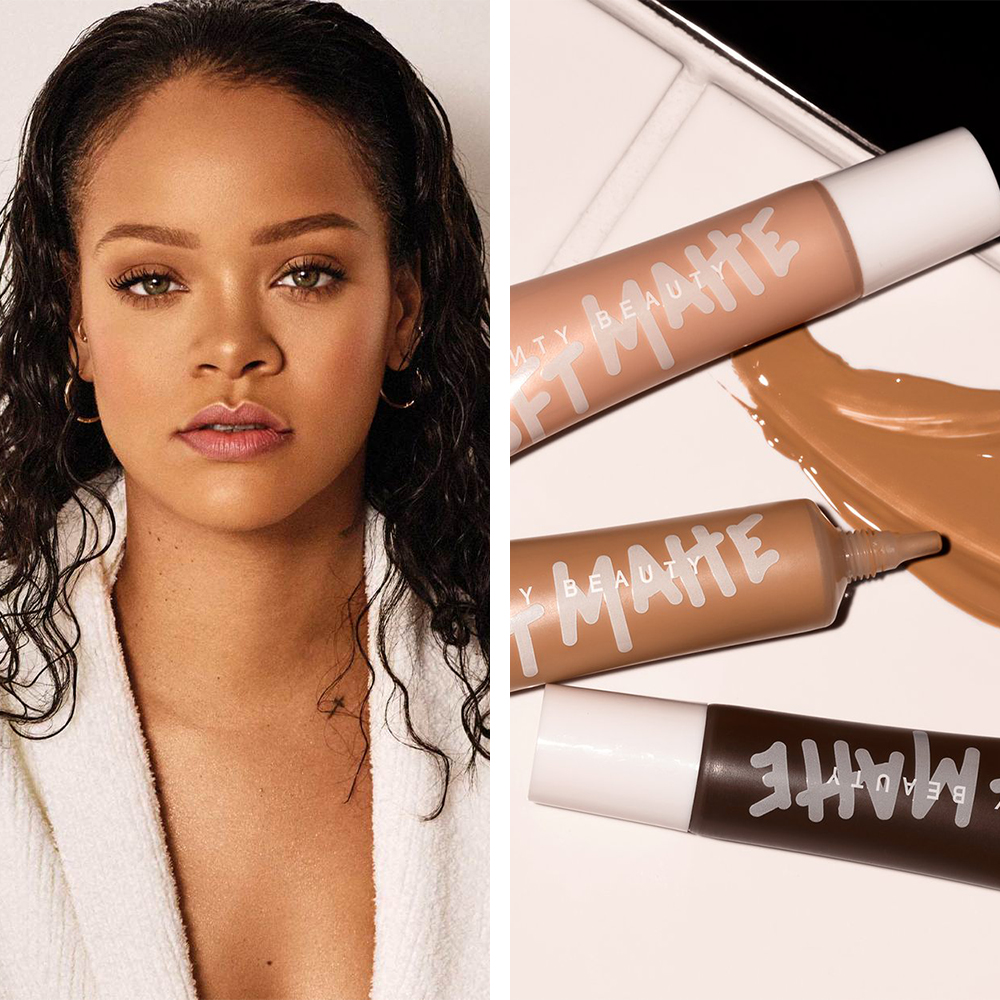

Several beauty and luxury conglomerates are in their divorcee era, shedding partners that no longer serve them, and LVMH Moët Hennessy Louis Vuitton is the latest to join their ranks, looking to rehome Fenty Beauty, the brand it created with Rihanna that demonstrated the business power of merchandise inclusivity in an industry that’s often viewed it as a revenue drain.
Reuters broke the news on Tuesday last week that the world’s largest luxury goods company has hired investment bank Evercore to find a buyer for its 50% stake in the makeup, haircare, fragrance, skincare and body care brand that generated $450 million in sales last year. Its report cites sources pegging the valuation at $1 billion to $2 billion. That’s a discount from 2021, when an estimate in Forbes put Fenty Beauty’s valuation at $2.8 billion.
Amid a global luxury slump, LVMH is cutting ties with Fenty Beauty despite the company’s fortunes turning around, at least slightly. In the third quarter, it registered 1% organic revenue growth and touted improvement “across all business groups and all regions” after two quarters of declines. The company’s Perfumes & Cosmetics division, which contains Fenty Beauty, Benefit, Dior, Guerlain, Givenchy, Maison Francis Kurkdjian, Make Up Forever and Fresh, was up 2% for the period. LVMH added to its beauty roster in September with La Beauté Louis Vuitton, a makeup line spearheaded by creative director Pat McGrath. Its Selective Retailing division with Sephora, Le Bon Marche and DFS Group saw third-quarter revenues up 7%.
Fenty Beauty is one of the most successful celebrity brands ever conceived, and it’s the most successful brand born at Kendo, the LVMH-owned incubator. Launched in 2017 at Sephora with 40 shades of Pro Filt’r Soft Matte Longwear Foundation, Fenty Beauty set a new standard for shade ranges. With the tagline “Beauty For All,” it sparked a chain reaction dubbed the “Fenty effect,” prompting its competitors to broaden complexion ranges to keep up. Subsequent product hits include Gloss Bomb Universal Lip Luminizer, Diamond Bomb All-Over Highlighter and Match Stix Contour Skinstick. By 2018, Fenty Beauty rung up over $550 million in sales, eclipsing fellow celebrity beauty brands like Kylie Cosmetics and KKW Beauty. In 2022, it entered Ulta Beauty.
Lately, Fenty Beauty’s star has been fading. According to Puck News, the brand’s sales in North America are down double digits from their peak a few years ago. A source told the publication that the brand isn’t a “core asset” for LVMH, which is focused on Sephora and Dior. LVMH isn’t alone in focusing on core assets. Kering, the second largest luxury goods conglomerate in the world, has been pruning beauty to stick to its strengths. On Oct. 19, it revealed it would sell its beauty business to L’Oréal in a nearly $4.7 billion deal.
Beauty conglomerates are making similar moves. Estée Lauder, Coty and Kenvue are exploring offloading underperforming brands. Unilever has sold Dollar Shave Club and Elida Beauty, a collection of brands such as Q-Tips, Caress and TIGI, in recent years. L’Oréal has divested Carol’s Daughter.
With Fenty Beauty on the chopping block, Kendo’s fate is uncertain. Founded 15 years ago by then CEO of Sephora Americas David Suliteanu, the incubator continues to hold Ole Henriksen and Lip Lab. It recently sold beleaguered KVD Beauty to private equity firm Windsong Global and previously retired Formula X, Elizabeth and James, Bite Beauty and Marc Jacobs Beauty.
Fenty Beauty’s possible sale marks a pivotal moment for a brand that transformed the industry. The right buyer could reignite its momentum or dull the last vestiges of what made it burn bright. For this latest edition of our ongoing series posing questions related to indie beauty, we asked six investors, consultants, entrepreneurs and marketers the following questions: What impact has Fenty Beauty had on the industry, and what does it mean to consumers today? What are your recommendations for it under a possible new owner? Who are potential buyers for it?
-
 Malte Karstan E-Commerce, Retail and Luxury Goods Consultant
 Fenty Beauty didn’t just redefine inclusivity, it changed the way the beauty industry operates. When it launched in 2017, it created a seismic cultural and commercial shift. The 40 shades debut didn’t simply add range, it forced the industry to confront its blind spots and sparked what came to be known as the Fenty Effect. Inclusivity suddenly became not just a marketing story but a business strategy. Within months, legacy brands scrambled to expand their offerings, rethink their campaigns and reimagine their consumers.
Commercially, Fenty proved that representation sells. It showed that doing the right thing could also be incredibly profitable, redefining how brands think about growth, audience segmentation and emotional storytelling. For consumers, it continues to represent recognition and belonging. It’s not just a brand, it’s a symbol of visibility, empowerment and individuality, and that is a legacy few brands ever achieve.
If Fenty Beauty were to transition to new ownership, the future would largely depend on which of two scenarios unfolds. The first and perhaps most visionary would be Rihanna herself taking full ownership. That would allow her to steer the brand’s next chapter independently, preserving its cultural authenticity and deep emotional connection with consumers. The second scenario, aka a new strategic partner replacing LVMH, would demand a player with significant distribution power and operational scale.
For all its influence, Fenty still lacks the physical and digital visibility its cultural weight deserves. LVMH’s support and Sephora’s network were vital in building early prestige credibility, but that retail concentration also limited the brand’s global accessibility. A new owner with a broader omnichannel footprint could bring Fenty closer to consumers worldwide, not only through prestige retailers, but through curated online platforms and selective marketplace strategies.
When considering potential acquirers, the list narrows quickly once you weigh financial scale, strategic alignment and cultural understanding. L’Oréal is an unlikely candidate. Despite its size and sophistication, it has consistently avoided celebrity-led brands, preferring scientifically anchored or heritage-driven labels. Coty, though familiar with celebrity ventures through Kylie Cosmetics, is still navigating operational and balance sheet challenges, making another major celebrity acquisition risky.
Estée Lauder Companies, on the other hand, could be a realistic and even compelling buyer. While the group has recently seen a 9% decline in Q1, a brand like Fenty could offer the cultural relevance and generational reach it needs. ELC has the global retail infrastructure, marketing muscle and prestige positioning to elevate Fenty further, provided it respects the brand’s creative autonomy. It would be a bold but strategic move to reinvigorate a portfolio that leans heavily on legacy icons like Clinique, MAC and La Mer.
Puig is another strong contender. The Spanish house has shown it understands the chemistry between culture and commerce, having successfully scaled Charlotte Tilbury, also a founder-led brand deeply rooted in personality and artistry, and building long-standing partnerships with celebrity names such as Antonio Banderas and Shakira in fragrance. With its current IPO momentum and ambition to expand its global footprint in prestige beauty, Puig could bring both the agility and cultural understanding Fenty requires.
Kering is unlikely to return to the beauty game after transferring its licenses to L’Oréal, while conglomerates like Unilever and P&G remain too far removed from the high-touch, emotion-led nature of prestige beauty. Beiersdorf has been acquisitive recently, but remains focused on science-backed skincare and clinical trust rather than celebrity equity. Shiseido, though large enough, is currently prioritizing skincare and wellness-oriented innovation over celebrity-driven propositions.
Finally, private equity remains a credible route especially with firms like Advent International or L Catterton, both of which have experience scaling lifestyle brands before public offerings or strategic exits. Such partners could provide the capital and operational discipline to expand globally while preserving Rihanna’s creative lead.
- Manica Blain Founder, Top Knot Ventures
When Fenty Beauty burst onto the scene in 2017, it didn’t just launch another celebrity brand, it redefined the beauty landscape. Its bold commitment to inclusion, expressed through a 40-shade foundation range, forced the entire industry to reevaluate what representation looked like.
The ripple effect was enormous. Legacy brands scrambled to expand their shade ranges, while indie upstarts, many of which are in my own makeup bag like Live Tinted, Kulfi, Basma Beauty and others, emerged inspired by Fenty’s vision of true inclusivity.
As a woman of color myself, I felt that shift deeply. It was the first time a brand of that scale made people who looked like me feel so clearly seen. The impact is, quite honestly, immeasurable, and as a consumer, I thank Rihanna and her partners.
A potential change in ownership, though, raises big questions. With LVMH’s deep resources and distribution already behind the brand, it’s hard to imagine what another partner could bring that LVMH hasn’t. That said, I do think innovation has stalled a bit in recent years, as sometimes happens when a brand becomes a global institution.
A new owner, perhaps one more nimble or entrepreneurial, might reignite that creative spark and bring back some of the cultural electricity that defined Fenty’s early years. And perhaps Rihanna herself could find even more freedom to experiment under a structure that feels less corporate and more collaborative.
As for potential buyers, my instinct is that private equity might make the most sense here. (Looking at you Colin [Welch], and your team at TSG!) With strong cash flow, global recognition and the kind of brand equity you can’t manufacture, Fenty could be a compelling platform investment.
A strategic like L’Oréal might have been a fit, but they may have their hands full after this past week, so that seems less likely. Amongst the strategics, if I had to bet, I'd say maybe Puig could be an interesting contender. Whoever steps in will need to balance scale with soul; to preserve the cultural power Fenty represents while reigniting the innovation that once made it unstoppable.
- Armando Zuccali CEO, GAG London Equity Capital Limited
Fenty didn’t just diversify beauty, it redefined its cultural language. Before Rihanna, inclusivity was an afterthought. After Fenty, it became a business standard. The brand turned visibility into aspiration, proving that diversity could drive both cultural and commercial power.
Fenty’s next phase should focus on depth over expansion. The brand has stretched itself thin. It needs fewer launches and sharper storytelling. Returning to complexion, where Fenty’s credibility began, and investing in AI-driven personalization could reignite its relevance.
Strategic players like Estée Lauder, L’Oréal, or Coty could pursue Fenty to strengthen their gen Z and prestige portfolios. But private equity, from Advent to Blackstone, might see greater value in its DTC potential and cultural cachet. Whoever buys it will need capital, but, more importantly, cultural fluency.
- Brooke Yoakam Co-Founder and CEO, AvidAI
Fenty Beauty completely redefined inclusivity in the beauty industry. They set a new standard for shade range, accessibility and representation, showing that everyone deserves to feel seen and celebrated. Their impact went far beyond product innovation and shifted how brands approach diversity and authenticity.
What made Fenty special is that it wasn’t performative. The quality of the products spoke for themselves, and the brand’s quiet confidence earned lasting consumer trust.
Lean into Rihanna. She is not just a celebrity face, she is the vision and credibility behind Fenty. Rhode’s success is a great example of how strong founder-led storytelling can drive cultural influence and commercial success. A new owner should empower Rihanna to continue leading with creativity and authenticity rather than diluting the brand’s personality. People don’t just buy Fenty products, they buy into Rihanna’s world.
L’Oréal is the most obvious candidate, though it may be too expected given their recent acquisition streak. Coty would be a strong contender since they have proven their ability to scale celebrity-led brands like Kylie Cosmetics and translate virality into longevity.
E.l.f. should also be on the radar. After their acquisitions of Rhode and Naturium, they have shown they are willing to think big. While E.l.f. has limited experience in prestige channels like Sephora, if LVMH is eager to offload its stake, a bold move from E.l.f. would not be impossible.
- Andrew Shore Consultant and Former Managing Director, Moelis & Co
Fenty has had a profound impact on the industry in many ways. First, start with its mission: beauty for all. The brand is arguably the first celebrity-backed brand where inclusivity is its DNA. (However, MAC is likely the first truly inclusive color brand.) Fenty defined a new era of prestige beauty rooted in diversity, authenticity and cultural power and relevancy. The brand rode the wave of Rihanna’s global success. She might be the third most popular modern female recording icon after Taylor Swift and Beyonce.
Second, it launched with the widest shade range of its hero line, Pro Filt’r Foundation. This forced industry-wide diversification. Brands from Dior to Estée Lauder expanded shade ranges and inclusivity became de rigueur and not a PR message. Fenty redefined prestige beauty’s standards of authenticity and representation, although some might argue that 40 shades is too many. Undoubtedly, Fenty sparked a generational shift toward socially conscious prestige/luxury. This was real, authentic founder engagement, not a licensing deal.
Third, its pricing is extremely accessible: $19 to $34 range. While others like Morphe let consumers know they didn’t need to spend $40 for a palette, Fenty hit a sweet spot in the industry’s pricing architecture.
Fourth, Fenty was clearly helped as it was a Kendo creation, and Sephora was the brand’s exclusive retail anchor. As LVMH owns both Kendo and Sephora, the brand had its prestige global infrastructure at “better” terms than other brands.
Fifth, Fenty raised the bar for competition, although authenticity (and clean) is no longer a competitive advantage. As everyone knows, today it is table stakes.
Perhaps the story line or narrative should shift now from inclusion to innovation and artistry. Like most beauty brands, the product line should be pruned: eliminate 20% to 25% of slow velocity SKUs, largely in complexion and lips. Try limited editions with its core items like Pro Filt’r and Gloss Bomb. Perhaps Fenty might want to relaunch in China with KOL partnerships and local shades. Piggyback off of Rihanna’s global appeal and launch into adjacent categories, like wellness.
The playing field of buyers has certainly narrowed with L'Oréal and E.l.f probably sitting this one out given recent deals. Coty is a seller and not a buyer. I don’t see it as a fit for Shiseido or Estée Lauder either. It could be of interest to Puig, who’s had success with Charlotte Tilbury.
Overall, Rare Beauty is the best analog. It is a faster grower with a better margin structure and it still could not find a buyer. Perhaps some PE firm takes a stab at it or Fenty tries to go public, which is possible, but harder, for a slowing business. Or Rihanna could buy back the brand.
- Divya Gugnani Founder, Concept To Co and 5 Sens
Fenty Beauty fundamentally shifted the beauty landscape by proving that true inclusivity—40 foundation shades at launch—wasn't just the right thing to do, but incredibly profitable. It forced legacy brands to expand their shade ranges and showed that underserved consumers represented massive untapped revenue. To consumers, Fenty became more than makeup. It represented being seen and validated. That cultural currency is powerful, but requires constant innovation to maintain.
The new owner needs to resist the temptation to coast on the brand's legacy. Double down on product innovation. The initial foundation launch was revolutionary, but what's next? Strengthen the digital and social strategy to recapture a new generation of consumers.
And, critically, maintain the brand's authenticity around inclusivity while expanding into new categories. The North American sales decline suggests they've lost momentum with core consumers, which is fixable but requires genuine commitment and investment.
If you have a question you'd like Beauty Independent to ask beauty industry investors, consultants, entrepreneurs and marketers, send it to [email protected].

Leave a Reply
You must be logged in to post a comment.