
K-Beauty dominated Amazon’s four-day summer Prime Day event even as beauty’s broader performance cooled from last year.
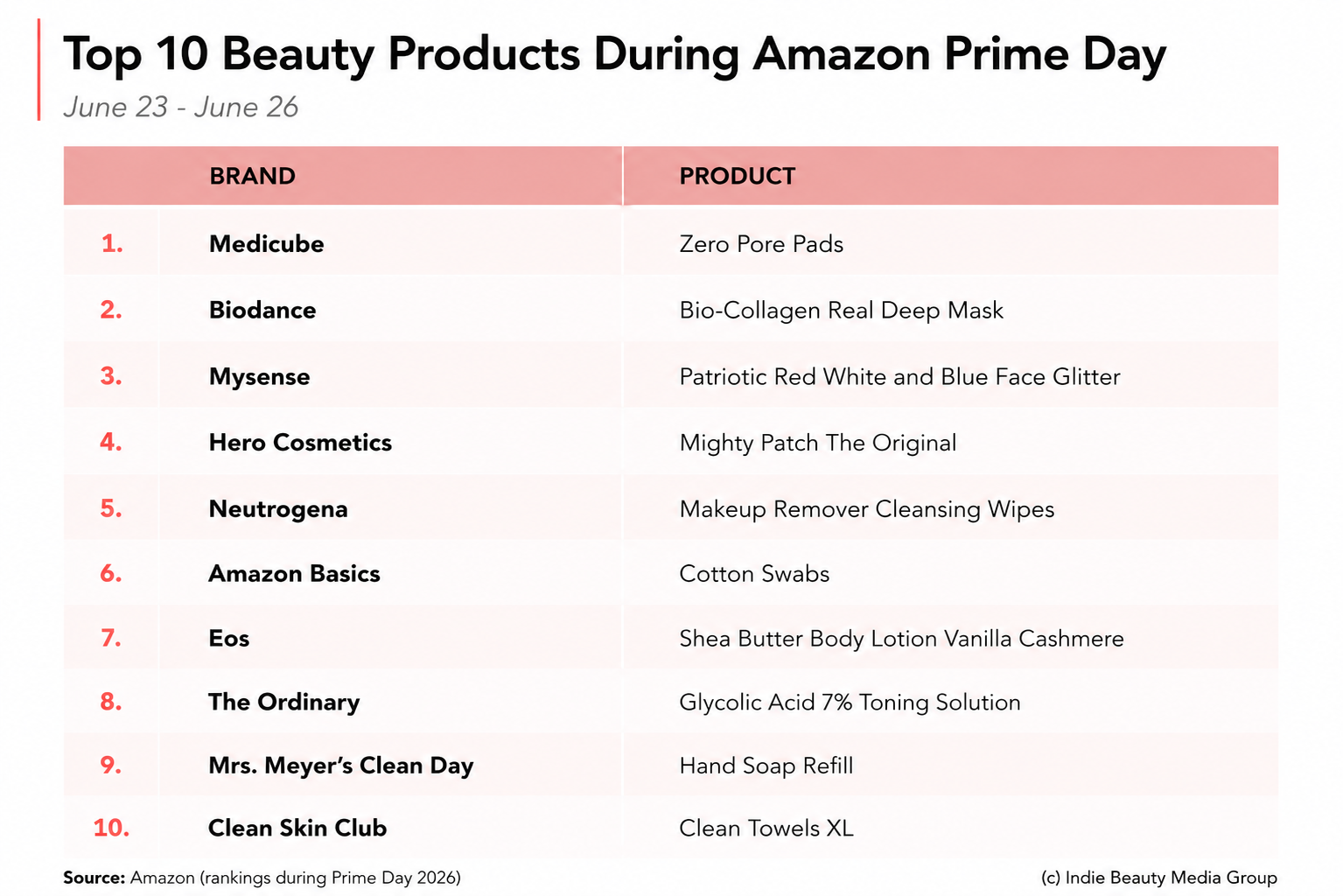
Korean brands accounted for nearly 40% of the top 100 skincare products sold during the event that ran from June 23 through 26, according to Amazon. Medicube, Anua, Cosrx, Laneige, Biodance, Aestura, Illiyoon, D’Alba, Beauty of Joseon, Kahi, Abib, Meditherapy, Celimax, Equalberry and Dr. Melaxin all appeared in the rankings. In Amazon’s overall beauty and personal care rankings for the four-day event, Medicube’s Zero Pore Pads and Biodance’s Bio-Collagen Real Deep Mask claimed the No. 1 and No. 2 spots.
The remaining products in the top 10 beauty and personal care rankings, in descending order, were Mysense’s Patriotic Red White and Blue Face Glitter, Hero Cosmetics’ Mighty Patch Original, Neutrogena’s Makeup Remover Cleansing Wipes, Amazon Basics’ Cotton Swabs, Eos’ Shea Butter Body Lotion Vanilla Cashmere, The Ordinary’s Glycolic Acid 7% Toning Solution, Mrs. Meyer’s Clean Day Hand Soap Refill and Clean Skin Club’s Clean Towels XL.
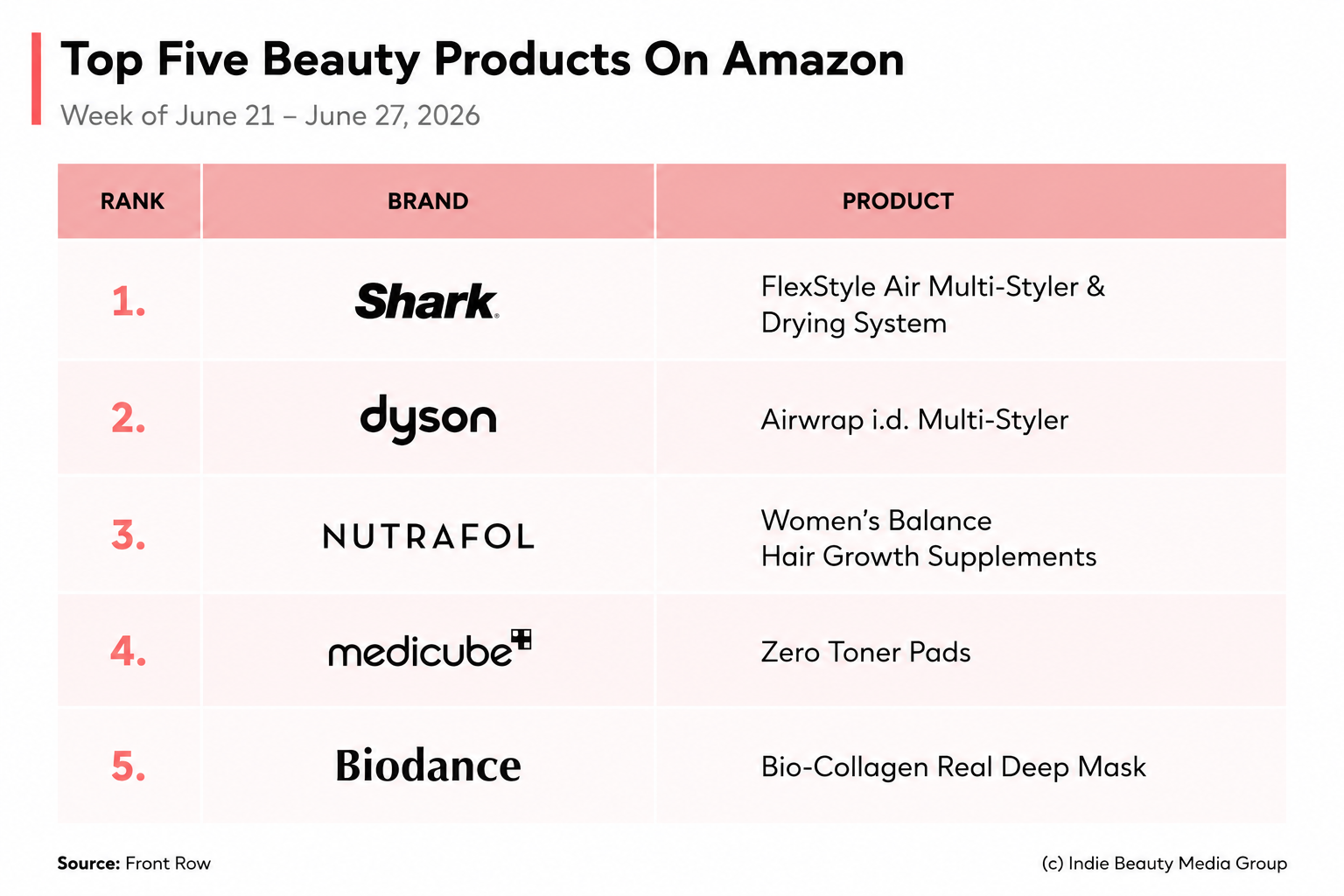
Across the full week of Amazon Prime Day, stretching from June 21 to 27, data from intelligence software Perpetua Prism and e-commerce and marketplace agency Front Row’s rankings told a somewhat different story. Shark’s FlexStyle Air Multi-Styler & Drying System and Dyson’s Airwrap i.d. Multi-Styler were the two top-performing beauty products on Amazon. Nutrafol’s Women’s Balance Hair Growth Supplements, Medicube’s Zero Toner Pads and Biodance’s Bio-Collagen Real Deep Mask rounded out the top five.
Medicube’s prominence was no coincidence. The APR Corp.-owned brand leaned into Prime Day far more aggressively than most competitors, discounting several hero products by more than 45% while investing heavily in premium advertising placements, affiliates and paid media. The brand entered the event well-positioned. During the first quarter of the year, it accounted for about 14.1% of beauty sales on Amazon, up by a double-digit percentage.
Laura Meyer, founder and CEO of Amazon growth agency Envision Horizons, notes that Medicube now has four products ranked among Amazon’s top 50 beauty and personal care products by unit sales. “Historically, Laneige has consistently dominated the beauty category on Amazon, but this year Medicube was everywhere,” she says. “I’d be surprised if they generated much profit during the event, though. That said, they clearly captured meaningful market share, and if they have a strong customer lifetime value, the strategy could pay off over time.”
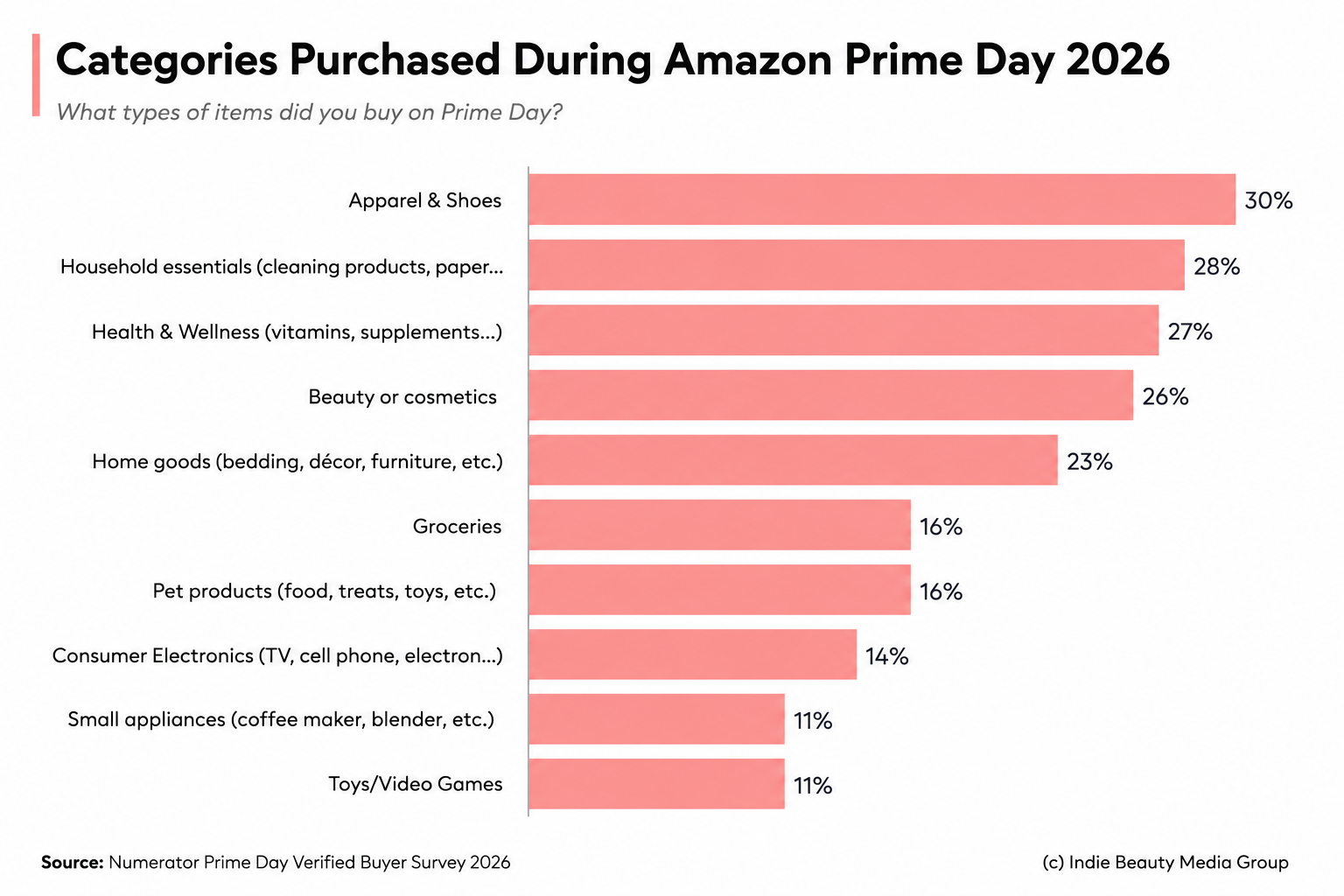
K-Beauty’s Prime Day breakout masked what was otherwise a softer Prime Day for beauty defined more by replenishment than discovery. According to data analytics firm Numerator, health and wellness, including vitamins and supplements, ranked as the third-fastest-growing category this year, behind apparel and shoes and household goods. Beauty and cosmetics placed fourth. Last year, by contrast, health and beauty was the top-performing category overall, with six of the 10 fastest-growing categories falling under it, including vitamins, supplements and skincare.
Perpetua Prism and Front Row’s Prime Day analysis show a similar pattern, with the majority of categories registering limited growth compared to last year’s event. Health and household grew 6% and beauty 1% year over year. Vitamins, minerals and supplements dipped 2%. Makeup was a bright spot within beauty, up 12% from last year and outpacing skincare, which grew 4% along with every other beauty subcategory.
“This year’s event didn’t generate the growth we’ve seen in years past,” says Emily Safian-Demers, VP of insights at Front Row. “It lacked the excitement and urgency of previous Prime Days, driven by macroeconomic pressure, an oversaturation of promotional events and broader retailer participation. The event painted a picture of a restrained consumer who is noticeably more cautious with discretionary spending.”
Within Envision Horizons’s client roster, strongest year-over-year growth came from clients specializing in pet and household rather than beauty. Its roster recorded a 223% increase in average daily sales during Prime Day compared to June averages and 18% on a yearly basis. Conversion rates improved 20% year over year, but browsing sessions dropped by 8% and average order value dropped by 10.7%, marking the third consecutive year of declines.
More than half of Prime Day sales came from new-to-brand customers, but that figure slipped from 66% last year to 56% as a larger share of shoppers returned to replenish products they already knew and trusted. Sessions across the agency’s roster climbed roughly 12% during the three weeks leading into Prime Day, indicating consumers spent weeks researching products before waiting for the event to complete their purchases.
“People knew Prime Day was coming. They were building their carts long before the event took place,” says Meyer. She adds, “We still had some beauty clients experience triple-digit year-over-year growth, but they are challenger and emerging brands, not legacy. It reinforces our broader thesis that consumers approached this Prime Day as a way to combat inflation. While they were still willing to purchase lower AOV beauty products, their spending was largely focused on replenishing essentials rather than splurging on discretionary or luxury items.”
Stefan Bars, founder and CEO of Amazon marketing agency Digital Performance Partners, says beauty and personal care remained highly promotional throughout the event, which was extended from two days to four days last year, despite discounting moderating year over year. Beauty discounts generally ranged between 20% and 30%.
“That makes sense given Amazon is a critical battleground for these categories, and the economics, repeat-purchase behavior and customer-acquisition value can make the investment worthwhile, but the real question is not just how the four days performed,” says Bars. “It is what incremental profitability was created across the full Prime Day window, including pre- and post-event pullback, and what momentum was gained that will create incremental profitability in the coming months.”
Beauty’s softer performance reflects changes in how consumers approached Prime Day, with smaller but more frequent purchases. Adobe Analytics estimates shoppers spent a record $26.4 billion online during the four-day event across American retail websites, up 9.3% from last year. However, Numerator found that average order value on Amazon declined to $47.66 from $53.34 last year, with average household spending slipping to $143.45, even though nearly two-thirds of participating households placed multiple orders.
Numerator also found that nearly 69% of items purchased cost less than $20, and just 3% exceeded $100. Premier Protein Shakes, Liquid I.V. Hydration Packets, Temptations Cat Treats, Dawn Powerwash Spray and Hefty Ultra Strong Trash Bags were the event’s biggest sellers overall.
Advertising data shows that shoppers followed a longer path to purchase during Prime Day. According to Envision Horizons, paid click-through rates surged 83% and visibility climbed 147% from last year. However, advertising conversion rates declined 16% and return on ad spend slipped 14%, suggesting that shoppers used paid ads as a starting point before researching products elsewhere and returning to Amazon to complete purchases organically.
Delaney Rogers, account director at Envision Horizons, recommends that, rather than treating Prime Day as a four-day marketing sprint, brands should identify a single hero product capable of introducing shoppers to their wider assortment and drive awareness around it months in advance through Amazon advertising, creators, social media and direct-to-consumer channels. As consumers research purchases ahead of Prime Day, brands are being rewarded less for the deepest discount than for earning a place in shoppers’ consideration sets months earlier.
“What is your brand? What is that number one product?” says Rogers during a webinar on Prime Day results. “There’s such a strong connotation between the two that it’s part of that identity…that’s really what’s going to nudge you forward.” She stresses, “You can’t try and capture them on the day hoping your discount is what’s going to get that visibility because it’s so competitive. We’re already having campaigns in place so we know day of Prime we have that high visibility.”



Leave a Reply
You must be logged in to post a comment.