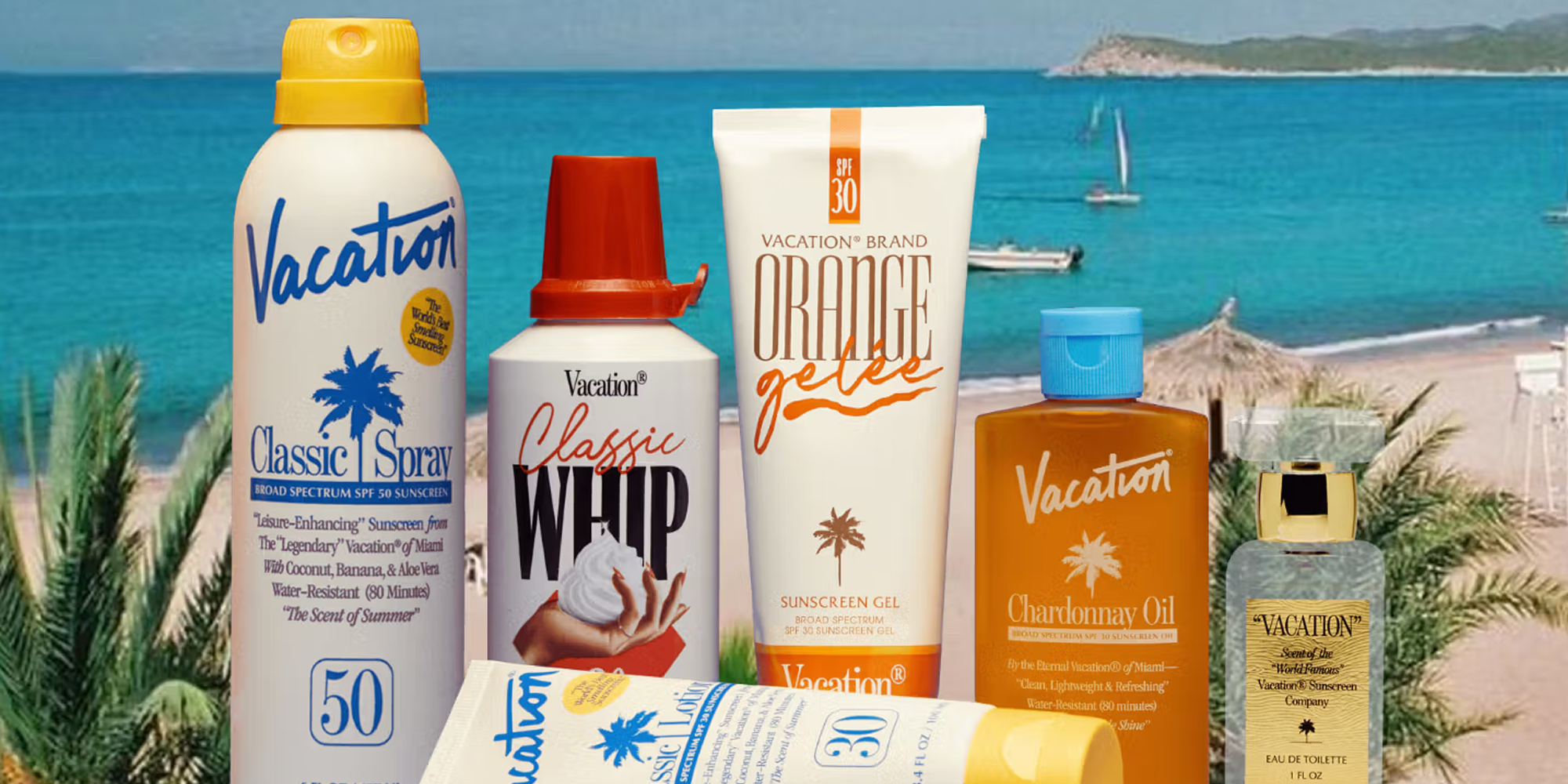


Could VMG Partners replicate the success it had with Sun Bum at Vacation?
The private equity firm, which invested in Sun Bum ahead of its sale to SC Johnson in 2019 at a $400 million valuation or roughly 5.7 times its approximately $70 million in sales at the time, has taken a minority stake in Vacation, the nostalgia-soaked masstige sun care brand, with ambitions to pursue a similar exit trajectory. However, it faces challenges in realizing those ambitions, as Vacation must prove it’s more than a marketing play and navigate both a proliferation of competitors and consolidation at the top of the sun care category.
Women’s Wear Daily broke the news of VMG’s investment on Monday. Beauty Independent has learned the firm wrote a $70 million check, primarily dedicated to secondary proceeds, at a $210 million valuation. Sources estimate Vacation’s 2025 sales are between $54 million and $70 million, with earnings before interest, taxes, depreciation and amortization (EBITDA) in the single-digit percentage range. In December, Beauty Independent reported that Vacation had hired investment bank Raymond James to explore a minority stake deal.
Prior to VMG’s minority stake in the company, Vacation raised roughly $11.2 million in funding, including from investors Silas Capital, True Beauty Ventures, BFG Partners, Sonoma Brands, Bluemercury co-founder Marla Beck and Sol de Janeiro co-founder and CEO Heela Yang. VMG and True Beauty Ventures currently hold board seats. At VMG, Vacation joins a stacked beauty portfolio with brands such as Tone, Nécessaire, Kosas and Snif. The firm sold Drunk Elephant to Shiseido in 2019 and closed a $1 billion consumer-focused fund last year.
Like Sun Bum, Vacation was developed by founders without traditional beauty industry experience and built around lifestyle positioning, evocative visuals and storytelling. Sun Bum co-founder Tom Rinks, who came from the design and apparel fields, rooted the brand in surf culture, borrowing from its vibrant aesthetic and irreverent attitude.
Vacation was founded by friends Marty Bell, Lach Hall and Dakota Green. Bell previously created and ran Poolsuite, a retro internet radio platform. Hall and Green have backgrounds in advertising and brand building. They launched Vacation in direct-to-consumer distribution in 2021, and the brand entered Ulta Beauty two years later before extending to retailers such as Target, CVS, Nordstrom, Bluemercury and Costco. Its prices largely run from $15 to $25.
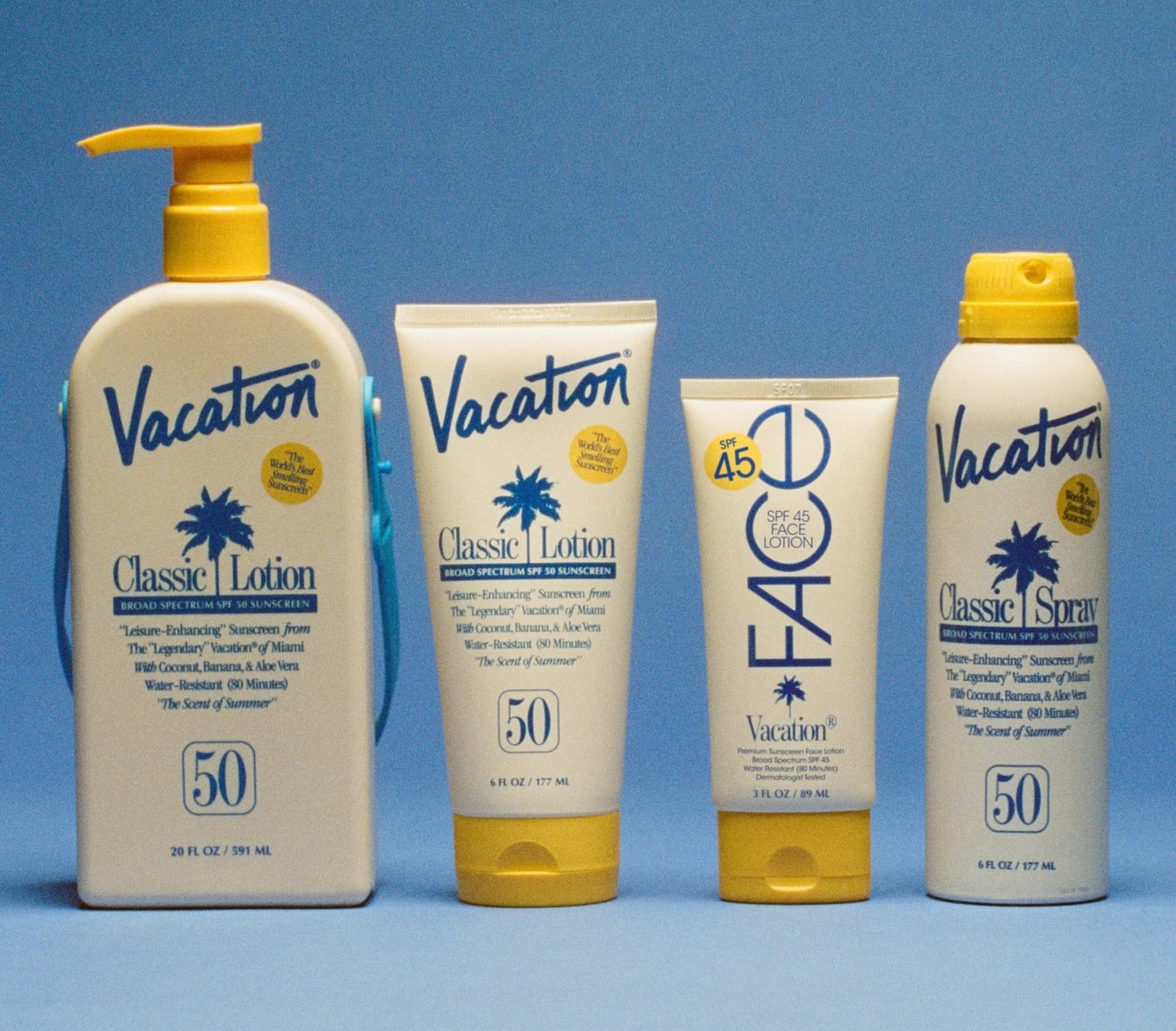
Vacation’s product signatures are its scent (a coconut-and-banana confection concocted by Arquiste Parfumeur founder and perfumer Carlos Huber and Givaudan senior perfumer Rodrigo Flores-Roux), atypical formats (foam, oil and gel are on its sun protection menu) and collaborations. Pepsi, Prince, AriZona and Wham-O have collaborated with the brand.
Vacation excels at buzz, undoubtedly a critical currency in today’s market and a key investor draw, but the question is whether it can execute on the less glamorous fundamentals: consistently driving unit velocity, sustaining repeat purchases, improving margins and erecting a defensible moat.
“The sun care space is at an interesting inflection point,” says Andrew Glass, co-founder of sun care brand By the Beach and hair removal brand Wakse. “For a while, clever marketing could carry a brand a long way. Today, product innovation and formulation are becoming far more important than storytelling alone.”
Glass believes Sun Bum has moved beyond sizzle to establish a sales machine that Vacation could emulate. “It has a much broader appeal across age groups and demographics, and more importantly, it delivers on core product expectations in a way that makes it easy to repurchase,” he says. “It became less about the campaign and more about being a reliable, everyday staple.”
Although Vanessa Ting, a fractional CMO and former senior analyst of market research at Neutrogena, doesn’t think Vacation’s retro marketing approach has peaked, that’s a concern. “They created nostalgia branding and the nostalgic creative vibe, but nostalgia is now a trend,” she says. “I walked into a matcha store in LA recently and it was all about nostalgia. We may be at or reaching peak nostalgia, and that could be a threat to their brand and sales.”
“Building a repeat business goes far beyond marketing.”
During Sun Bum’s tenure in VMG’s portfolio, the brand went from a curiosity to a sun care staple. By 2024, according to marketing research firm Circana, it was among the top five sun care brands in the United States, alongside Neutrogena, Banana Boat, Coppertone and private label.
Vacation has yet to reach that level. As of Nov. 30 last year, consumer insights firm Numerator estimates Vacation captured a 1.2% share of the U.S. sunscreen market. As of June 30, it ranked as the No. 13 brand in the category.
Data from commerce growth agency Navigo Marketing shows consumers are actively seeking the brand. The brand’s search terms on Amazon increased to 7.5 million in March from 2.3 million in October. Its body sunscreen and after-sun share of sales are up 80% and 318% year over year on the platform, respectively. Vacation’s Amazon standing is heavily supported by paid spend, per Navigo. On Ulta’s website, the brand holds 11.2% share of voice on page one, almost entirely without paid support.
“What sets them apart is that the creative is a deliberate strategy. The founders came from advertising and every piece of content—the newsletters, the Instagram, the UGC [user-generated content] on TikTok—adds up to something coherent,” says Meredith Matthes, account director at Navigo. “They’ve built a world, not just a product, and people want to be part of it.”
Vacation is trying to expand its world in a market that’s being inundated by entrants, notably K-Beauty brands like Beauty of Joseon, Round Lab, Anua, Medicube and Innisfree, and simultaneously concentrating sales in brand leaders. Although long-term projections for sunscreen are optimistic as the category’s seasonality diminishes and awareness about it as a wrinkle and skin cancer preventer rises, predictive commerce intelligence platform Daash Intelligence finds sun care has had a relatively flat year.
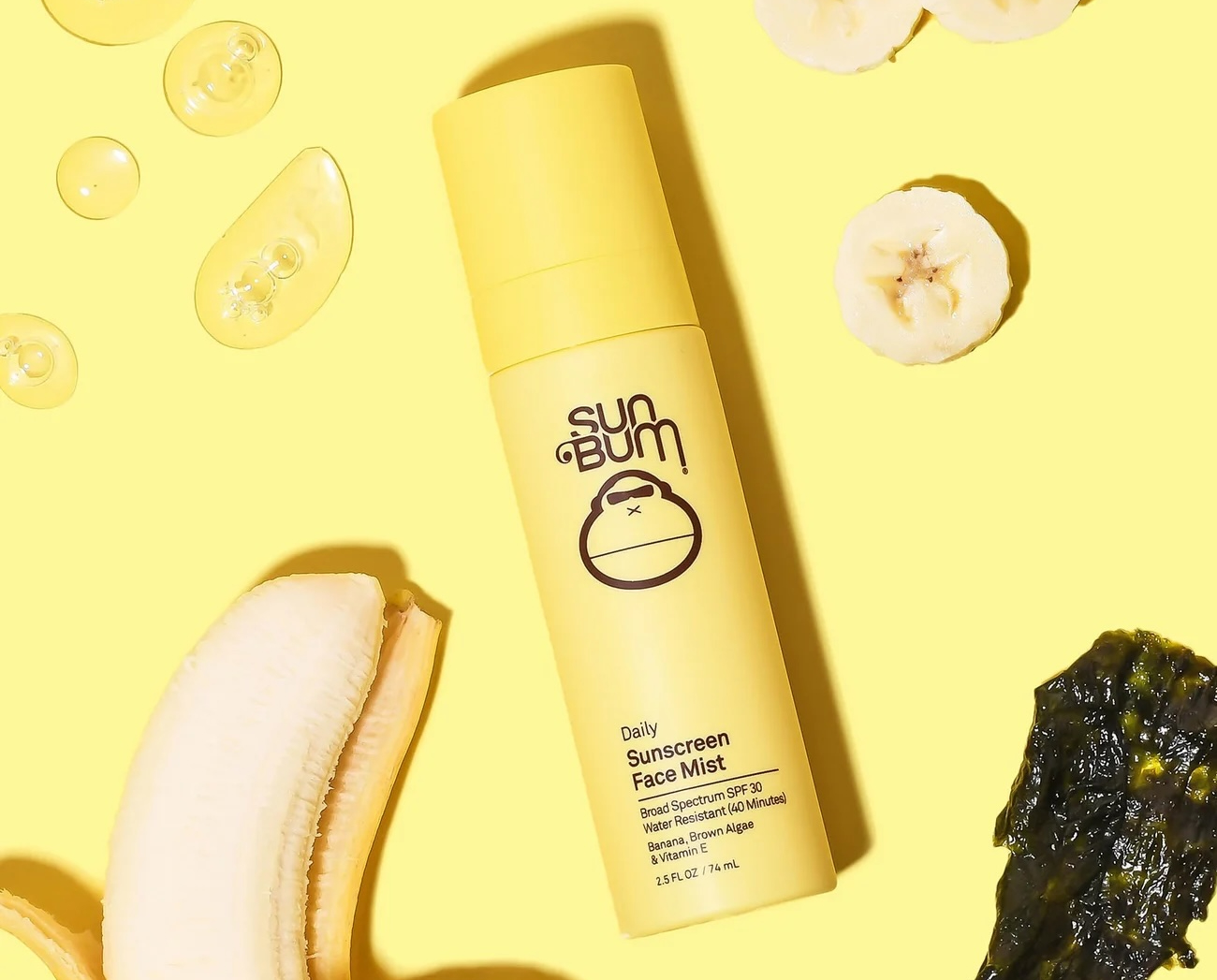
“Sun care growth continues to be driven by redistribution within the category, not expanded demand,” says Melissa Munnerlyn, co-founder and CMO at Daash. “Leadership is consolidating. Sun care is increasingly a winner-takes-more category, with 2025 gains concentrated among established, trusted brands rather than new entrants.” She notes, “Clinical, skincare-positioned SPFs are where share is being won. Clinically and treatment-led SPFs outperformed in 2025, posting positive growth indices in an otherwise flat market, signaling share capture, not increased usage.”
Arielle Moody, co-founder of sun care brand Mama Sol, sees a performance-fueled transformation of the space, an area that Vacation is underdeveloped in. “Building a repeat business goes far beyond marketing,” she says. “It comes down to formulation, experience and trust. If the product doesn’t feel good on the skin, consumers won’t use it consistently, no matter how strong the brand is.
Moody elaborates, “What we’re seeing now is a shift toward skincare-first SPF, products that people actually want to wear every day. That’s where long-term retention is built. Vacation has done an incredible job creating a strong brand identity, and this kind of investment [from VMG] signals that sun care is evolving into a much more sophisticated and competitive category.”
Ultimately, Glass concludes Vacation could potentially become the next Sun Bum. “They already have the hardest part: a distinct brand identity,” he says. “The next chapter is proving they can translate that into products that perform, scale and become part of people’s everyday lives.”
Click here to learn more about Dealmaker Summit happening June 8 & 9 in New York.

Leave a Reply
You must be logged in to post a comment.